










Getting access to quick funds as a student in India is no longer as difficult as it once was. Whether you need money for a semester fee, a laptop, hostel rent, examination expenses, or an unexpected personal emergency, a ₹50,000 loan is well within reach for many students today.
The financial lending landscape in India has changed dramatically over the last few years. Banks, non-banking financial companies (NBFCs), and digital lending apps have all expanded their products to serve younger borrowers — including full-time students who may not have a regular income. Understanding how these loan products work, what lenders look for, and which options suit your profile can save you a great deal of time and money.
Who Can Apply for a ₹50,000 Student Loan in India
The eligibility criteria for a ₹50,000 loan vary depending on the type of lender you approach. However, there are some common requirements across most lending institutions.
Age: Most lenders require borrowers to be at least 18 years old. Some digital lending platforms extend loans to students as young as 18, while traditional banks may prefer applicants who are 21 or older.
Enrollment Status: Many lenders require proof that you are currently enrolled in a recognized university, college, or vocational institution. This acts as a proxy for future income potential and demonstrates that the borrower has a defined path ahead.
Co-applicant or Guarantor: Since most students do not have a stable income, lenders often ask for a co-applicant — typically a parent or guardian — who has a regular income and an acceptable credit profile. The co-applicant becomes jointly responsible for repayment.
Credit History: Students who have never borrowed before naturally have no CIBIL score. Several lenders, particularly digital NBFCs and fintech platforms, have adjusted their models to accommodate this. They use alternative data points such as academic performance, college reputation, and family income to assess creditworthiness.
Income Proof (for part-time workers): If you have a part-time job, freelance income, or a stipend from an internship, providing that documentation can significantly improve your chances of approval — even for a modest ₹50,000 loan.
Types of ₹50,000 Loans Available to Students
There is no single "student loan" product designed specifically for amounts like ₹50,000 in India. Instead, students can access this amount through several different loan categories, each with its own structure, interest rate, and application process.
Personal Loans for Students
Personal loans are unsecured, meaning you do not need to pledge any asset as collateral. Several banks and NBFCs offer personal loans starting at ₹10,000 and going up to ₹5 lakh or more. For a ₹50,000 instant personal loan, approval is relatively straightforward if you have a co-applicant with a steady income.
Interest rates on personal loans for students typically range from 12% to 30% per annum, depending on the lender, the co-applicant's profile, and your repayment tenure. Shorter tenures result in higher EMIs but lower total interest paid, while longer tenures reduce the monthly burden but increase the overall cost.
Education Loans (Small-Ticket)
Education loans in India are usually associated with large tuition amounts for engineering, medicine, or overseas studies. However, some banks and cooperative lenders now offer small-ticket education loans starting at ₹50,000 for vocational courses, skill development programs, diploma courses, and short-term professional certifications.
These loans often carry subsidized interest rates — especially for students from economically weaker sections under government schemes. Repayment typically begins after a moratorium period that lasts until the course completion, giving students time to find employment before starting EMIs.
Digital Lending App Loans
Several RBI-registered fintech companies have built platforms specifically targeting young, first-time borrowers. These apps evaluate your profile using non-traditional parameters and can disburse ₹50,000 directly to your bank account within hours of approval.
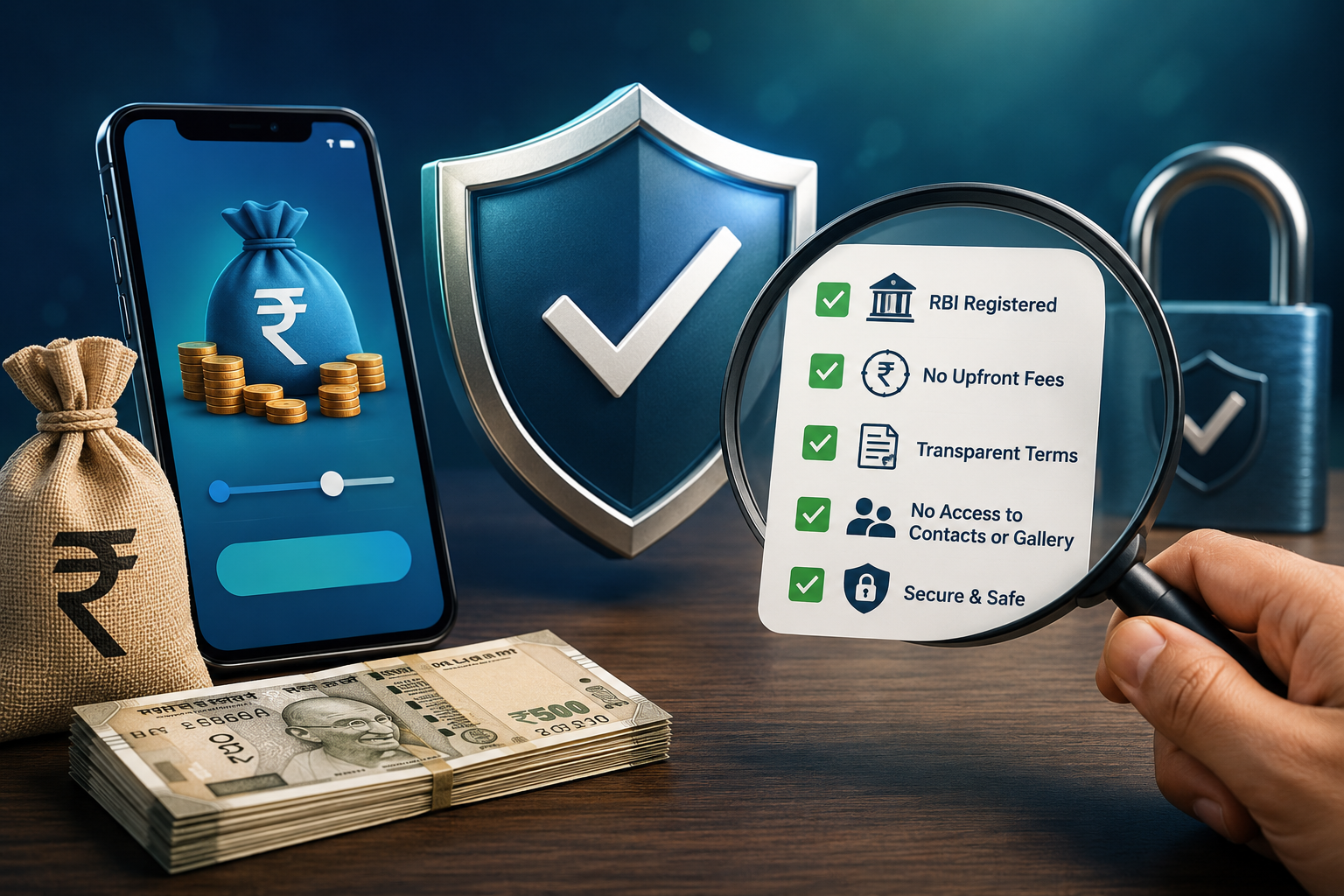
While convenience is a major advantage here, students must be cautious. Interest rates on app-based loans can be significantly higher than bank loans, and some platforms include processing fees and other charges that increase the effective cost of borrowing. Always verify that the lender is registered with the Reserve Bank of India before applying.
Loans Against Fixed Deposits or Insurance Policies
If you or your family holds a fixed deposit or an insurance policy with a surrender value, you may be able to borrow against it. These secured loans often come with lower interest rates — sometimes as low as 7–9% per annum — and do not require income proof from the student. The loan amount is typically a percentage of the deposit or policy value.
Documents Required for a ₹50,000 Student Loan
The documentation process has been simplified considerably by digital lenders, but you will still need to have the following in order:
Identity Proof: Aadhaar Card is the most widely accepted. PAN Card is required for most formal loan applications and is mandatory for amounts above ₹50,000 at many institutions.
Address Proof: Aadhaar, passport, or utility bills in your name or your parent's name.
Enrollment Proof: Your college ID card, admission letter, or a bonafide certificate from your institution.
Income Proof (Co-applicant): Salary slips for the last two to three months, Form 16, or ITR if the co-applicant is self-employed.
Bank Statements: Last three to six months of bank statements for the co-applicant's account.
Photographs: Recent passport-size photographs as required by the lender.
For digital platforms, the entire process is paperless. You can upload scanned copies or photographs of documents directly through the app or website.
Interest Rates and Repayment: What to Expect
Understanding the true cost of a ₹50,000 instant loan online before you commit is critical. The interest rate advertised by a lender is not always the full picture — you must also account for processing fees, GST on fees, insurance charges, and prepayment penalties.
Here is a simplified example to illustrate:
A ₹50,000 personal loan at 18% per annum over 12 months results in a monthly EMI of approximately ₹4,584. Over the full tenure, you will repay roughly ₹55,008 — meaning the total interest cost is around ₹5,008. Add a processing fee of 2% (₹1,000) plus 18% GST on that fee (₹180), and your effective cost of borrowing becomes approximately ₹6,188.
At a higher interest rate of 30% per annum over the same tenure, the monthly EMI rises to about ₹4,824, and total repayment reaches approximately ₹57,888. The difference between a 18% rate and a 30% rate on ₹50,000 over one year is nearly ₹3,000 — a meaningful amount for a student managing a tight budget.
This is precisely why comparing multiple lenders before applying is so important. Platforms like <a href="https://bankcreds.com/instant-loan/">BankCreds</a> allow students and co-applicants to compare personal loan offers from multiple banks and NBFCs side by side — evaluating interest rates, processing fees, tenure options, and eligibility requirements in one place before making a decision.
Best Options for Students Seeking ₹50,000 in India
While specific product names and rates change frequently, the following categories of lenders generally offer the most accessible options for student borrowers in India:
Public Sector Banks
Banks such as State Bank of India, Bank of Baroda, and Punjab National Bank have education loan schemes and personal loan products that can accommodate a ₹50,000 requirement. The interest rates are generally lower than private lenders, and these banks are subject to strict RBI oversight. However, the application and approval process tends to be slower, and the documentation requirements may be more extensive.
Private Banks
Leading private banks have streamlined their personal loan application processes significantly. Many now offer pre-approved personal loans to existing account holders and their family members. If a student's parent holds a salary account with a private bank, there is a good chance the bank will offer a personal loan at a competitive rate with minimal documentation.
Registered NBFCs and Fintech Platforms
Several RBI-registered NBFCs cater specifically to young borrowers and first-time loan applicants. Their approval processes are faster, their interfaces are mobile-friendly, and they are generally more flexible about income requirements when a co-applicant is involved.
Before applying through any fintech platform, verify its registration status on the RBI's official website. Avoid any platform that is not clearly listed as a registered NBFC or lending partner.
Microfinance Institutions
For students from rural areas or smaller towns, microfinance institutions (MFIs) can sometimes provide small personal loans at reasonable rates. These institutions are regulated by RBI and typically serve underbanked communities. However, their loan products may not always be available online, and you may need to visit a branch.
Tips to Improve Your Chances of Getting Approved
Applying for a loan without preparation often leads to rejection, which can also negatively affect your credit profile if multiple hard inquiries are recorded in a short period. The following steps can improve your chances of a successful application:
Check your co-applicant's CIBIL score first. Since most students rely on a parent or guardian as a co-applicant, the co-applicant's credit score will be one of the primary factors in the lender's decision. A score above 700 is generally considered favorable. If the score is below 650, it may be worth waiting a few months while the co-applicant clears any outstanding dues before applying.
Apply for the right amount. Applying for exactly what you need — ₹50,000 — rather than a higher amount reduces your debt burden and improves approval odds. Lenders assess the loan-to-income ratio, and a smaller, realistic request is more likely to be approved quickly.
Choose the right lender for your profile. Not every lender is suited for every borrower. Students enrolled in premier institutions may find some lenders offer better terms. If you are in a vocational program, look for NBFCs with specific schemes for that segment.
Avoid multiple simultaneous applications. Each loan application triggers a hard inquiry on the co-applicant's credit report. Multiple applications within a short window can lower the credit score and signal financial distress to lenders. Apply to one or two well-researched options rather than sending applications to ten platforms at once.
Keep your documents ready before applying. Delays in submitting documents are one of the most common reasons for slow approvals. Having your Aadhaar, PAN, college enrollment proof, and co-applicant's income documents scanned and ready speeds up the process considerably.
Government Schemes for Student Borrowers
The Government of India has several schemes designed to make education finance more accessible. While these are primarily aimed at funding tuition for full degrees, some elements may apply to students seeking smaller amounts for course-related expenses.
The Central Sector Interest Subsidy Scheme (CSIS) provides interest subsidy during the moratorium period for education loans up to ₹7.5 lakh for students from economically weaker sections. The Padho Pardesh scheme (for minority communities studying abroad) and various state government scholarship-linked loan schemes are also worth exploring through your college's financial aid office.
These schemes are typically administered through scheduled banks and may require specific documentation about family income and course type. Enquire at your bank or your institution's accounts department to understand which schemes you may qualify for.
Responsible Borrowing as a Student
A ₹50,000 loan may seem small, but it is a real financial obligation. Missing EMIs — even once — can affect your co-applicant's credit score and create friction in your household. Before taking on any loan, ask yourself three honest questions:
First, do you genuinely need this money, or is there another way to manage the expense — a scholarship, a part-time job, or a delayed purchase? Second, can your co-applicant comfortably afford the monthly EMI without straining the family budget? Third, do you have a realistic plan to contribute to repayment once you start earning?
Borrowing responsibly as a student sets the foundation for a healthy financial life. Your first loan, repaid on time, builds your personal credit history and makes future borrowing — for a home, a vehicle, or a business — significantly easier and cheaper.
Conclusion
A ₹50,000 loan is genuinely accessible for students in India today, whether through a personal loan with a co-applicant, a small education loan, or a regulated digital lending platform. The key is to understand your options, compare offers carefully, verify lender credentials, and borrow only what you can comfortably repay.
Take the time to read every term in the loan agreement — the interest rate, processing fee, repayment schedule, and prepayment terms. A well-informed borrower is always in a stronger position than one who applies in a hurry. With the right preparation and the right lender, getting ₹50,000 when you need it as a student is a straightforward and manageable process.





Add Comment