










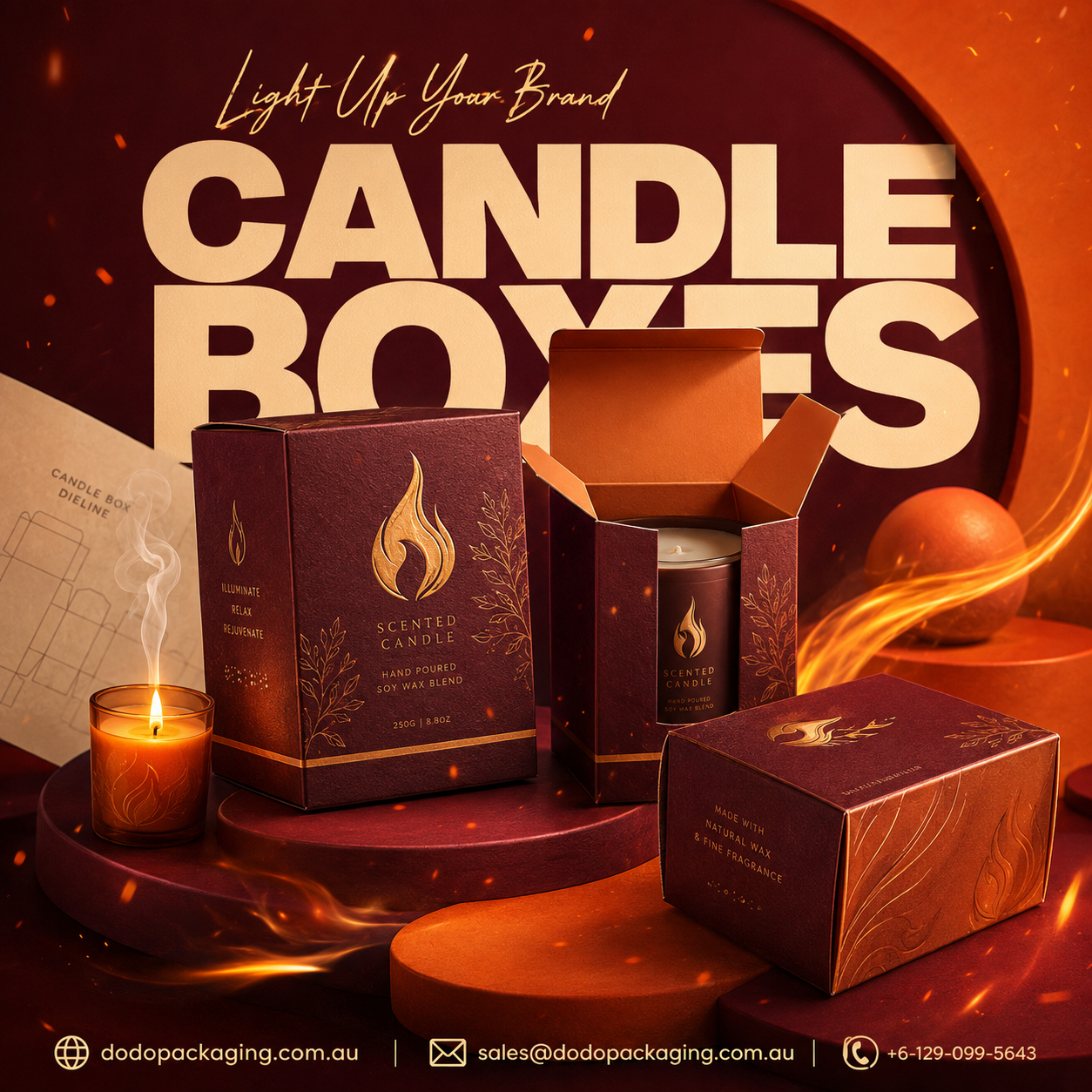


andles are a strange product to package — fragile, often glass-housed, and sold almost entirely on sensory promise rather than visible function. A customer can't smell a candle through the box, so the box has to do the convincing on its own. Candle boxes carry that weight for every SKU on the shelf, and for higher-priced lines, luxury candle boxes push that further, turning packaging into part of the product experience itself. This guide covers what makes candle packaging work, where luxury builds earn their cost, and how to choose the right box for your line.
Why Candle Packaging Has Its Own Rules
Candles sit at an unusual intersection of fragile, heavy, and scent-sensitive, which makes their packaging needs different from most retail boxes.
- Weight and fragility — glass jar candles are heavy relative to their footprint and prone to cracking without proper cushioning
- Scent preservation — poor-quality board or loose-fitting boxes can let fragrance fade before the candle ever reaches a customer
- Shelf differentiation — candles are a heavily saturated category, and generic packaging disappears fast next to more distinctive competitors
- Gift positioning — a large share of candle sales are gift purchases, which raises the bar on presentation regardless of price point
Standard Custom Candle Boxes
Most candle brands run on folding carton or corrugated-lined boxes for their core range — cost-effective at volume, fully customisable in print, and structurally sound for typical jar or pillar candle weights.
Common Candle Box Styles
- Tuck-end cartons — the most common style for single candles, cost-efficient and quick to assemble
- Sleeve-and-tray boxes — a two-piece design offering a more premium unboxing feel without the full cost of rigid board
- Window boxes — a die-cut window that lets the candle's colour or jar design show through before opening
- Corrugated shipping boxes — used as an outer layer for e-commerce candle orders, often paired with a retail-ready inner box
You can see DODO Packaging AU's standard range applied directly on the candle boxes line, covering sizes and finishes for everyday candle SKUs.
Luxury Candle Boxes: Where Packaging Becomes Part of the Product
Luxury candle boxes exist for a specific reason — at a higher price point, the packaging has to visually justify the cost before the candle is even lit. This is where rigid board construction, premium finishes, and considered unboxing details take over from standard folding cartons.
What Sets Luxury Candle Boxes Apart
- Rigid board construction — thicker, sturdier stock that holds shape and signals quality the moment it's picked up
- Magnetic or shoulder-box closures — a controlled, resistant lid lift that standard tuck-end cartons can't replicate
- Foil stamping and embossing — gold, silver, or debossed detailing on brand names and icons, catching light in a way flat print can't
- Fitted inserts — foam or moulded pulp inserts that hold the candle firmly in place, both for protection and for the reveal moment when the lid comes off
- Interior lining — a contrasting or branded interior paper that shows the instant the box is opened
DODO Packaging AU's luxury candle boxes line is built specifically around this tier — rigid construction and premium finishing designed for higher-value candle lines and gift positioning.
Materials Guide for Candle Packaging
| Material | Best For | Key Advantage |
|---|---|---|
| SBS Folding Carton Board | Standard single candles, retail SKUs | Cost-effective, strong print quality |
| Rigid Board | Luxury and gift-tier candles | Structural strength, premium feel |
| Kraft Paperboard | Natural/soy candle lines | Eco-friendly appeal, rustic aesthetic |
| Corrugated | E-commerce shipping outer layer | Crush and impact protection in transit |
Material choice should track brand positioning as closely as it tracks candle weight — a $60 soy candle in a thin, generic carton undersells itself just as much as an overbuilt rigid box on a budget tea-light line overspends.
Finishing Options Worth Considering
- Matte lamination — soft-touch, fingerprint-resistant, a strong default for most premium and mid-tier candle lines
- Spot UV — glossy detail over a matte base, often used on logos or a single design element
- Foil stamping — the single highest-impact upgrade for luxury candle boxes, especially on brand names and minimalist icon marks
- Debossing — recessed detail that adds a tactile, felt-before-seen quality to the unboxing
- Window cutouts — effective on standard boxes where the candle's jar or colour is part of the sell; less common on fully rigid luxury builds, where the closed box itself is the design statement
Common Mistakes in Candle Packaging
- Underestimating jar candle weight — a box built for a lightweight pillar candle often can't handle the weight and fragility of a glass jar candle without proper cushioning
- Skipping insert planning — loose candles shifting inside a box during transit is one of the most common causes of cracked jars and damaged labels
- Mismatching packaging tier to price point — a luxury-priced candle in standard folding carton packaging undercuts the price justification before the box is even opened
- Overloading luxury boxes with finishes — foil, emboss, spot UV, and a printed interior liner all at once can tip into cluttered rather than premium; one or two standout finishes usually reads stronger
- Ignoring scent retention — low-quality or poorly sealed board can allow fragrance to fade during storage and shipping, a detail easy to overlook until customer feedback flags it
How to Order Custom Candle Boxes
- Confirm candle dimensions and weight, including jar type if applicable
- Choose standard folding carton or luxury rigid construction based on price tier and brand positioning
- Select material and finish — matte, gloss, foil, kraft, or spot UV
- Plan inserts for glass jar candles or fragile pieces needing secure placement
- Request a sample to confirm structural fit and finish quality before a full production run
- Confirm MOQ and turnaround, particularly for rigid or heavily customised luxury runs, which typically carry longer lead times than standard cartons
Frequently Asked Questions
What's the difference between standard candle boxes and luxury candle boxes?
Standard candle boxes are typically folding carton or corrugated builds designed for cost-efficiency at volume, while luxury candle boxes use rigid board construction and premium finishes like foil stamping or magnetic closures to match a higher price point.
Do candle boxes need inserts?
Glass jar candles in particular benefit from foam or moulded inserts to prevent shifting, cracking, or label damage during shipping and handling.
What material is best for eco-friendly candle packaging?
Kraft paperboard is the most common choice for eco-conscious or natural/soy candle lines, offering a recyclable, rustic aesthetic that pairs well with minimal print.
Are luxury candle boxes worth the extra cost?
For higher-priced candle lines, generally yes — the packaging visually justifies the price point and strongly influences gift-purchase decisions, where presentation matters as much as the product itself.
Can candle boxes preserve scent before the candle is used?
A well-sealed, quality board box helps slow fragrance loss during storage and shipping, though scent retention also depends on the candle's own wax and fragrance load formulation.
Final Thoughts
Candle packaging has to sell a sensory product through a purely visual and tactile experience, which makes the box doing more work than it gets credit for. Whether that's a cost-efficient standard carton for an everyday line or a rigid, foil-stamped luxury build for a premium gift candle, matching the packaging tier to the product is what makes the shelf-to-hand experience feel intentional rather than accidental.
If you're sourcing custom candle boxes or luxury candle boxes for your brand, DODO Packaging AU designs and manufactures packaging built around your candle type, price point, and gifting goals. Get in touch for a free design consultation and quote.





Add Comment