











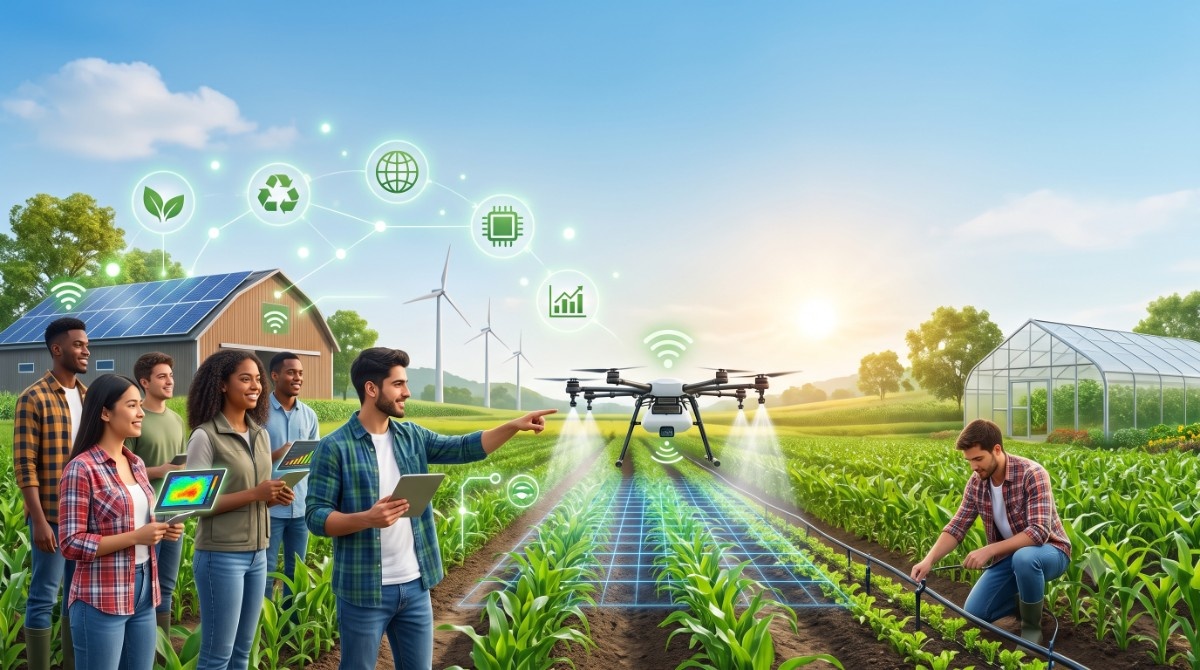


Climate change has impacted the agriculture sector in many ways, ranging from temperature changes to water scarcity. These effects have forced farmers to adopt Climate Smart Agriculture (CSA) to address food security and environmental challenges caused by climate change. Climate Smart Agriculture requires students studying B.Sc. (Hons.) Agriculture to learn about agricultural practices that ensure sustainability while maximizing yields.
What is Climate-Smart Agriculture?
Climate-Smart Agriculture is a generic term that describes alternative methods used in food production while conserving the environment. It is a comprehensive approach that focuses on three main aspects:
1. Enhancing agriculture production and profits.
2. Ensuring food security despite the impacts of climate change.
3. Reducing greenhouse gas emissions from agricultural activities.
It is a scientific model that requires farmers to embrace research, sustainability techniques and technologies to boost production.
Why Climate-Smart Agriculture Matters
Agriculture relies on natural resources like water, land, and climate. Climate change, therefore, brings about adverse effects on agricultural processes, including reduced yields and poor livestock production. Climate-Smart Agriculture enables farmers to anticipate climate trends and remain profitable despite these effects. Some of the benefits of adopting CSA include:
• Sustainable use of natural resources
• Optimized use of water
• Increased yields
• Reduced agricultural costs
• Resilience to pests and drought
• Richer and more fertile soils
• Enhanced biodiversity
These benefits can enable farmers to remain profitable despite the effects of climate change.
CSA Practices and Their Importance
Precision Farming Technologies
Precision farming requires farmers to rely on technology like Artificial Intelligence (AI) and drones to monitor and collect data on crops growth, detect pests and diseases, and utilize fertilizers and water efficiently. This approach has been instrumental in supporting farmers across the globe to increase their profits while conserving the environment.
Water Conservation Practices
CSA demands that farmers conserve water using techniques like drip irrigation, sprinklers, and moisture sensors. These methods allow farmers to utilize water efficiently while still obtaining good yields.
Sustainable Soil Management
Soil plays a crucial role in determining the yields obtained from a farming venture. CSA requires farmers to sustainably manage the soil using techniques like manure, composting, and crop rotation. These practices enhance soil fertility and improve its ability to store carbon, which in turn boosts yields.
Crop Management Practices
CSA necessitates the use of improved crop varieties that are resistant to pests, diseases, drought, and saline soils. Farmers should also plant high-yielding perennial crops to ensure economic returns while conserving natural resources.
Integrating Pest Management
CSA advises farmers to rely on biological pest control, alternate pest control methods, and appropriate crop varieties to prevent pests from destroying crops.
Technology in Climate Smart Agriculture
Modern technology has played a significant role in enabling farmers to remain profitable while conserving natural resources. Some of the technologies used in CSA include:
• Artificial Intelligence
• Internet of Things
• Drones
• GIS
• Weather forecasts
• Farm management information systems
• Data analytics
The incorporation of these technologies into agricultural practices has enabled farmers to make informed decisions that have helped boost their yields while conserving the environment.
Why B.Sc.(Hons.) Agriculture Students Should be Knowledgeable on Climate-Smart Practices
Students enrolling in B.Sc. (Hons.) Agriculture programs should be knowledgeable on CSA practices since they will be the future leaders of the agricultural industry. These practices will enable them to understand how to make the best decisions in modern agriculture to ensure sustainability. They will also be in a position to advise on the best techniques and technologies that can help boost yields. This knowledge will also be advantageous to these students since it will equip them with skills that are currently in demand by employers.
Careers Opportunities for Climate-Smart Agriculture Graduates
CSA opens doors to a wide range of career opportunities for graduates with expertise in this area. Some of the careers available for these experts include:
• Climate resilience analysts
• Agricultural consultants
• Precision Agriculture experts
• Soil conservation specialists
• Sustainability experts
• Agricultural researchers
• Agri-tech experts
• Environmental project coordinators
• Farm management consultants
The future of the agriculture industry will depend on these experts to make informed decisions that will increase food production while conserving the environment.
How B.Sc. (Hons.) Agriculture Makes its Students Future-Ready
Agriculture students who join Kumaraguru Institute of Agriculture (KIA) and complete the B.Sc. (Hons.) Agriculture program will be in a position to become future-ready agricultural professionals. This is because the course offers a combination of theoretical and practical knowledge on crop production, soil and water management, agricultural engineering, pest management, and farm management. Students also get involved in research projects, laboratory practices, and practical sessions on modern agricultural practices like precision farming and conservation to be in tandem with the current demands of the agricultural industry. All these will enable these students to excel in diverse careers in agriculture.
Conclusion
Climate-Smart Agriculture is the future of the agriculture industry because it enables farmers to maximize profits while conserving natural resources. This will be vital in the years to come as the world deals with climate change, which has had adverse effects on the agriculture sector. Since the agricultural industry is embracing technologies like AI, precision farming, and IoT, students enrolling in B.Sc.(Hons.) Agriculture should be knowledgeable on CSA practices to be future-ready professionals. This way, they will be in a position to help the agriculture sector achieve sustainability while boosting yields for the years to come.





Add Comment