











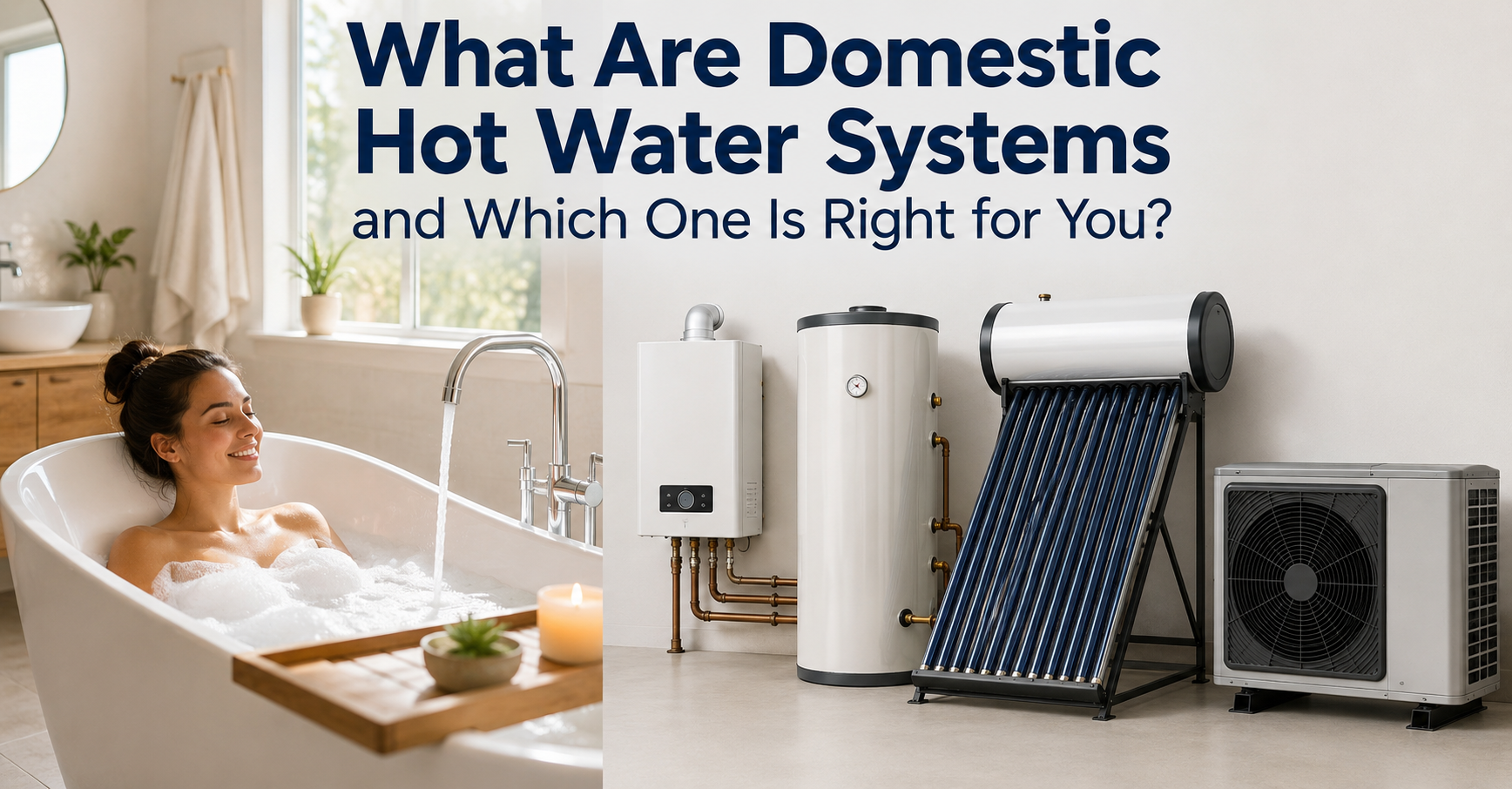

Choosing the right domestic hot water system is one of those decisions most homeowners only think about once their old immersion or boiler starts costing them a fortune. With energy prices what they are, more Irish households are looking at solar hot water panels as a long-term hot water solution rather than another quick fix. But before you commit, it helps to understand what domestic hot water systems actually are, how they differ, and which option genuinely suits your home.
What Are Domestic Hot Water Systems?
Domestic hot water systems are the setups that heat and store the water you use every day for showers, baths, washing dishes, and laundry. Traditionally, Irish homes have relied on electric immersion heaters or oil-fired boilers to do this job. Both work, but both also come with high running costs, especially as energy prices continue to climb.
This is where modern hot water solutions come in. Instead of burning oil or drawing constant electricity, newer systems draw on renewable sources like solar energy to heat water more efficiently, often at a fraction of the cost.
The Main Types of Domestic Hot Water Systems
1. Electric Immersion Heaters
The most common legacy system in Irish homes. Simple to install, but expensive to run daily, especially for larger households with high hot water demand.
2. Oil-Fired Boilers
Still widely used, particularly in rural areas without gas connections. Reliable, but fuel costs and price volatility make this an increasingly expensive way to heat water long-term.
3. Traditional Solar Thermal Panels
These use direct sunlight to heat water and can meaningfully reduce bills. Their main limitation is dependence on strong sunlight, which makes performance inconsistent given Ireland's cloudy, rainy climate.
4. Solar Hot Water Systems (Thermodynamic Technology)
This is where things get interesting. Modern solar hot water systems, like the thermodynamic panels LVP Renewables installs, combine heat pump technology with solar thermal collection. Rather than relying purely on direct sunlight, these panels absorb ambient heat from the sun, rain, wind, and surrounding air. That means they keep generating hot water even during Ireland's wetter, greyer months.
Why Solar Hot Water Panels Are Gaining Popularity in Ireland
Solar hot water panels solve the biggest problem with older solar thermal systems: weather dependency. Because they draw heat from the environment rather than sunlight alone, they can guarantee hot water 24/7, 365 days a year, regardless of whether it's sunny, raining, windy, or even snowing.
For homeowners, the benefits are significant:
- Can cover 100% of a household's domestic hot water needs
- Can cut water heating bills by up to 80% compared to standard immersion or oil-fired systems
- Compact 8kg panel design that suits almost any roof type
- Typically installed and operational within a single day
- Delivers hot water up to 55°C
Compare that to an oil boiler or immersion heater, both of which have you paying full rates for every litre of hot water, and the appeal of solar hot water systems becomes obvious.
How Solar Hot Water Panels Actually Work
It's a fairly elegant process once you understand it:
- A refrigerant liquid inside the panel circulates through a closed loop, with a very low boiling point around -30°C.
- This liquid absorbs environmental heat from sunlight, rain, wind, and ambient air, vaporising even on cold or overcast days.
- A small compressor then raises the temperature of this gas significantly.
- That heat is transferred to your water via a heat exchanger, and the cycle repeats continuously, with no defrost cycle needed.
This cycle is what allows solar hot water systems to outperform traditional solar thermal panels, particularly in a climate like Ireland's.
Which Hot Water Solution Is Right for You?
The right domestic hot water system depends on a few factors:
If you're still on an oil-fired boiler or electric immersion, and tired of rising bills, solar hot water panels offer one of the fastest ways to reduce costs without an overhaul of your existing heating setup.
If you already have traditional solar thermal panels but find they underperform during Irish winters, upgrading to a thermodynamic solar hot water system can close that seasonal gap.
If you're building or renovating, factoring solar hot water panels into your plans from the outset means a cleaner install and long-term savings from day one.
If you're comparing solar hot water systems to solar PV panels, it's worth knowing the difference: solar PV generates electricity, which can also be diverted to water heating, whereas solar hot water panels are purpose-built specifically for heating water directly, offering a guaranteed year-round supply.
Grants and Support Available
SEAI offers separate grant support for solar thermal and renewable hot water systems, which can help offset installation costs. Since eligibility and grant amounts can change, it's worth speaking with an SEAI-registered installer to confirm the current terms for your specific property.
Final Thoughts
Domestic hot water systems have come a long way from simple immersion heaters and oil boilers. With rising energy costs and Ireland's unpredictable weather, solar hot water panels now offer one of the most reliable and cost-effective hot water solutions available, working around the clock regardless of conditions outside.
If you're weighing up your options, it's worth getting expert advice tailored to your home, your roof, and your hot water needs, so you can choose a system that actually delivers on comfort and savings, not just on paper.





Add Comment