










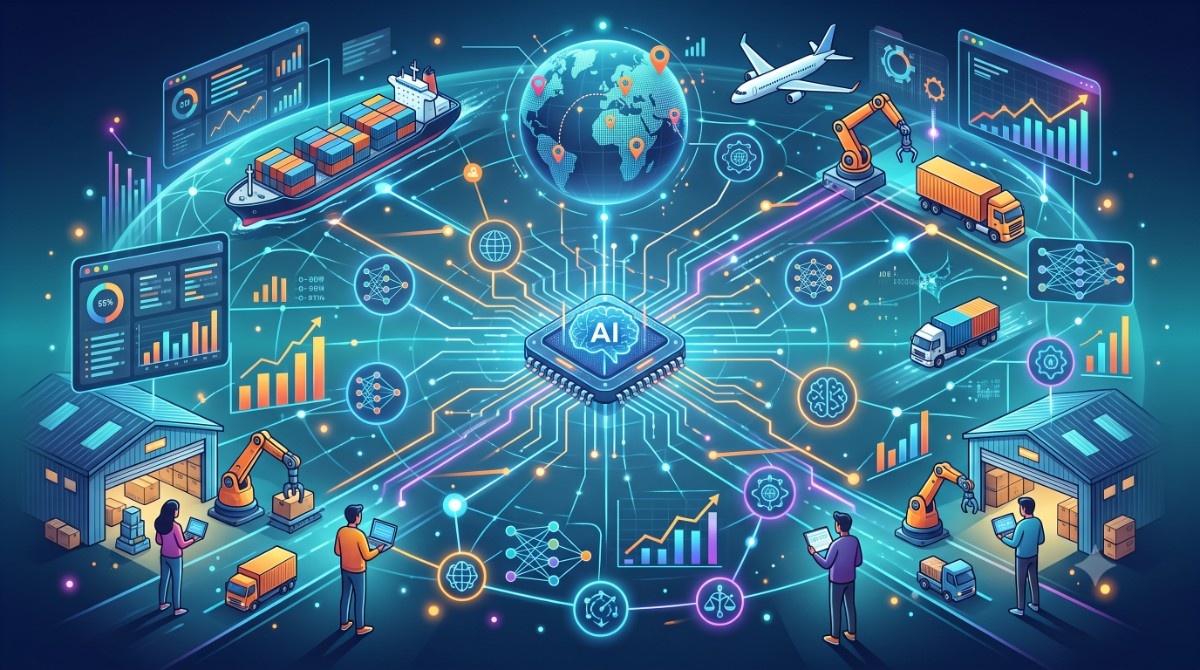


- Artificial Intelligence (AI) and data analytics are disrupting supply chains by introducing intelligent ways of forecasting, managing inventories, and planning logistics.
- Modern supply chain management courses are introducing digital technologies to equip students with the best practices in predictive business analytics and managing organizations intelligently.
- Organizations are demanding individuals who can apply AI to improve the efficiency of their supply chain operations.
- A future-focused Supply Chain Management course will empower students with relevant technical know-how and managerial skills required in today’s disruptive business world.
The supply chain management field has evolved over the years as technology has disrupted every aspect of business operations. From procurement, warehousing, logistics, inventory, transportation, and distribution, companies are adopting artificial intelligence (AI) and data analytics to improve their operations. As a result, employers are looking for individuals with contemporary skills in managing supply chains using new digital technologies.
Every Supply Chain Management course now emphasizes AI, business analytics, and other digital technologies to train students in managing tomorrow’s supply chains efficiently.
Understanding the Digital Revolution of Supply Chain Management
Traditional supply chains have been disrupted by digital technologies as businesses strive to be more productive and profitable. Companies are using digital business technologies to digitize supply chain functions and improve performance.
Some of the benefits of using digital technologies in supply chains include:
- Monitoring inventories
- Predicting demand
- Optimizing logistics routes
- Modernizing warehousing
- Enhancing supply chain collaborations
- Improving decision-making
- Saving costs
- Becoming agile
As a result, every modern supply chain manager must know how to use digital technologies to enhance supply chain management.
The Role of Artificial Intelligence in Supply Chain Management
AI is used in supply chains to automate activities and add intelligence. Organizations are using AI to transform their supply chain operations and create more value for their customers.
Some of the applications of AI in supply chain management include:
Demand forecasting
AI helps supply chain managers to predict demand and make data-driven inventory decisions. It enables firms to analyze historical demand patterns and come up with accurate projections.
Inventory management
AI can help managers to make accurate inventory projections. It can also recommend the most appropriate inventory levels for a firm based on its demand forecasts.
Route optimization
AI is used to optimize delivery routes in order to shorten delivery times while also reducing logistics costs.
Warehousing Automation
AI-powered robots are being used in warehouses to enhance performance through sorting, picking, packing, and scanning.
Why Has Data Analytics Been Critical in Supply Chains?
Modern supply chains have become complicated, with organizations generating tons of data from their operations. Data analytics helps to transform this mass of information into key business insights that can help managers make smart business decisions. Through data analytics, it becomes possible to measure performance, identify supply chain issues, and develop solutions to these challenges.
Some of the ways data analytics is applied in supply chain management include:
- Enhancing operational performance
- Tracking supply chains
- Improving supplier contracts
- Assessing transportation performance
- Lowering purchasing costs
- Improving customer relations
- Making informed business decisions
- Data analytics is essential in helping supply chain managers to monitor their operations and make continuous improvements.
How Supply Chain Management Courses Are Evolving
Modern supply chains have become complicated, with organizations generating tons of data from their operations. Data analytics helps to transform this mass of information into key business insights that can help managers make smart business decisions. Through data analytics, it becomes possible to measure performance, identify supply chain issues, and develop solutions to these challenges.
Some of the ways data analytics is applied in supply chain management include:
- Enhancing operational performance
- Tracking supply chains
- Improving supplier contracts
- Assessing transportation performance
- Lowering purchasing costs
- Improving customer relations
- Making informed business decisions
Data analytics is essential in helping supply chain managers to monitor their operations and make continuous improvements.
Career Growth Opportunities in the Age of AI and Big Data
Modern supply chain management concepts have created many job opportunities for individuals with digital technical skills. A career in supply chain management offers exciting careers, including Supply Chain Analysts, Logistics Managers, Operation Managers, Procurement Managers, Inventory Planning Managers, Demand Planners, Warehouse Managers, Distribution Managers, Supply Chain Consultants, and Global Logistics Executives.
These professional skills can be acquired at KCT Business School through the best MBA Logistics and Supply chain Management courses.
How KCT Business School Trains Future Supply Chain Leaders
KCT Business School’s MBA Logistics and Supply Chain Management course will enable students to develop analytical and managerial skills needed in the modern supply chain field. Through this course, students will obtain skills in using AI and business analytics in supply chain operations. They will also be trained in using enterprise systems such as ERP and other business technologies used in modern supply chains.
Students will also gain insight into current supply chain trends and management practices by engaging in case studies, internships, live projects, and industry interactions. This way, students will be able to apply their skills and knowledge to actual-world scenarios and become successful supply chain managers.
Conclusion on Why Supply Chain Courses Must Involve AI, Analytics, and Digital Technologies
Artificial intelligence and data analytics techniques have revolutionized the supply chain management field, making it more efficient and effective. Firms are relying on AI to make informed supply chain decisions, ranging from demand forecasting to optimizing logistics routes and managing suppliers.
Modern Supply Chain Management courses must incorporate these digital technologies to equip students with contemporary skills that are readily needed in today’s modern business world. By understanding AI and data analytics concepts, students can be able to meet the growing demand for skilled supply chain managers in the current job market.





Add Comment