













Revenue Cycle Management (RCM) is the financial backbone of every healthcare practice. It encompasses the entire process of managing patient revenue, from appointment scheduling and insurance verification to claim submission, payment collection, and accounts receivable follow-up. While many providers focus on billing and collections when discussing revenue cycle performance, medical credentialing is often overlooked despite its significant influence on practice revenue.
Medical credentialing is one of the first steps that enables healthcare providers to participate in insurance networks and receive reimbursement for services. Without proper credentialing, providers may experience claim denials, payment delays, compliance issues, and revenue disruptions. Understanding the relationship between credentialing and revenue cycle management can help healthcare organizations improve financial performance and reduce administrative challenges.
Understanding Medical Credentialing
Medical credentialing is the process of verifying a healthcare provider's qualifications, education, training, licensure, certifications, and professional history. Insurance companies, hospitals, and healthcare organizations use credentialing to confirm that providers meet established standards before allowing them to deliver services or participate in payer networks.
The credentialing process typically includes verification of:
- Medical licenses
- Educational background
- Residency and fellowship training
- Board certifications
- DEA registration
- Malpractice insurance coverage
- Work history
- Hospital affiliations
- Professional references
Once credentialing is completed, providers can proceed with payer enrollment and begin billing insurance companies for covered services.
Understanding Revenue Cycle Management
Revenue Cycle Management refers to the financial process healthcare organizations use to manage revenue generated from patient care.
Key components of RCM include:
- Patient registration
- Insurance verification
- Medical coding
- Charge capture
- Claims submission
- Payment posting
- Denial management
- Accounts receivable follow-up
- Patient collections
Each stage of the revenue cycle must function efficiently to ensure timely reimbursement and financial stability.
The Connection Between Credentialing and Revenue Cycle Management
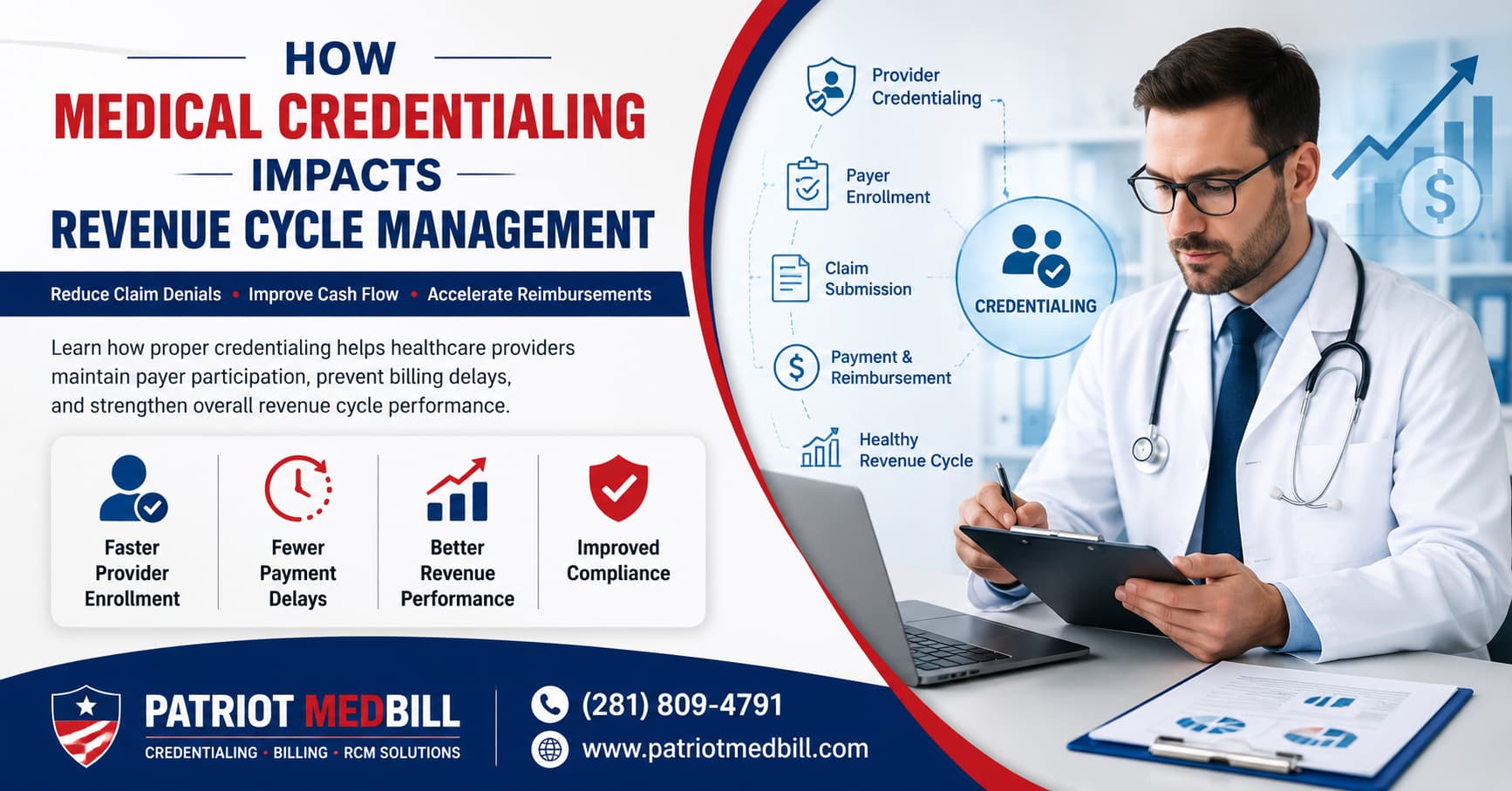
Credentialing directly affects a provider's ability to submit claims and receive payments. If a provider is not properly credentialed with an insurance company, claims may be denied regardless of whether services were medically necessary or correctly coded.
In many cases, revenue cycle problems begin long before a claim is submitted. They often start with credentialing issues that prevent providers from participating in payer networks.
As a result, credentialing serves as the foundation upon which successful revenue cycle management is built.
Credentialing Determines Network Participation
Insurance companies require providers to complete credentialing before joining their networks.
When providers become in-network, they gain access to:
- Covered patient populations
- Contracted reimbursement rates
- Simplified claims processing
- Increased patient access
Without credentialing approval, providers may be considered out-of-network and face reimbursement challenges.
Patients often prefer in-network providers because of lower out-of-pocket costs. Therefore, credentialing can directly influence patient volume and practice revenue.
Credentialing Delays Can Delay Revenue
One of the most common challenges healthcare organizations face is delayed credentialing.
Insurance credentialing often takes between 60 and 120 days. During this period, providers may be unable to bill certain insurance plans.
Potential consequences include:
- Delayed claim submission
- Lost revenue opportunities
- Reduced cash flow
- Scheduling limitations
For new practices, credentialing delays can significantly affect financial performance during the early stages of operation.
Healthcare organizations that plan credentialing activities well in advance are often better positioned to maintain stable revenue streams.
Improper Credentialing Leads to Claim Denials
Claim denials are among the most costly issues in revenue cycle management.
Many denials occur because providers:
- Are not credentialed
- Are not enrolled with a payer
- Have expired credentials
- Have incorrect provider information on file
When claims are denied due to credentialing issues, organizations must spend additional time investigating and correcting the problem.
This process increases administrative costs and delays reimbursement.
Repeated denials can also negatively affect key revenue cycle performance metrics.
Provider Enrollment and Credentialing Work Together
Credentialing and provider enrollment are closely connected but distinct processes.
Credentialing verifies qualifications.
Provider enrollment establishes billing privileges.
Even when a provider completes credentialing successfully, reimbursement problems can occur if enrollment is incomplete.
Revenue cycle teams must ensure that both processes are completed accurately to prevent payment interruptions.
Failure in either area can result in claim rejections and revenue delays.
Credentialing Supports Clean Claim Submission
A clean claim is a claim that contains accurate information and can be processed without requiring additional review.
Clean claims contribute to:
- Faster reimbursement
- Lower denial rates
- Reduced administrative workload
- Improved cash flow
Credentialing supports clean claim submission by ensuring provider information is accurate and current.
Examples include:
- National Provider Identifier (NPI)
- Tax identification numbers
- Practice locations
- Specialty designations
When payer systems contain incorrect provider information, claims may be rejected before entering the adjudication process.
Impact on Patient Scheduling and Access
Credentialing also affects patient access to care.
If providers are not credentialed with specific insurance plans, practices may need to:
- Delay appointments
- Limit patient scheduling
- Refer patients elsewhere
Reduced patient access can affect both patient satisfaction and revenue generation.
In-network participation often increases appointment volume and creates more opportunities for reimbursement.
As a result, credentialing influences both operational efficiency and financial performance.
Re-Credentialing Protects Revenue Streams
Credentialing is not a one-time process.
Most insurance companies require providers to complete periodic re-credentialing reviews.
These reviews verify that providers continue to meet network requirements.
Failure to complete re-credentialing can result in:
- Network termination
- Claim denials
- Payment holds
- Loss of reimbursement eligibility
Revenue cycle teams must track re-credentialing deadlines carefully to avoid disruptions.
Maintaining active participation status is essential for uninterrupted cash flow.
Credentialing Helps Reduce Administrative Costs
Administrative inefficiencies can significantly impact healthcare profitability.
Credentialing errors often create additional work for:
- Billing departments
- Practice administrators
- Revenue cycle teams
- Compliance staff
Examples include:
- Correcting denied claims
- Updating provider records
- Resubmitting applications
- Communicating with payers
Accurate credentialing reduces these administrative burdens and allows staff to focus on revenue-generating activities.
Compliance and Financial Risk Management
Credentialing plays an important role in healthcare compliance.
Insurance companies and regulatory organizations expect providers to maintain current credentials.
Failure to do so can create risks such as:
- Regulatory penalties
- Audit findings
- Reimbursement recoupments
- Contract violations
Strong credentialing processes help organizations remain compliant while protecting revenue.
From a risk management perspective, credentialing serves as both a financial and operational safeguard.
The Role of CAQH in Revenue Cycle Efficiency
Many insurance companies use CAQH ProView as a centralized provider data repository.
CAQH helps streamline credentialing by storing:
- Provider demographics
- Licenses
- Certifications
- Work history
- Malpractice information
Maintaining an updated CAQH profile can improve revenue cycle efficiency by reducing delays and supporting faster credentialing reviews.
Outdated CAQH information often leads to processing delays and additional payer requests.
Regular profile maintenance helps ensure smoother operations.
Credentialing and Denial Management
Denial management is a critical component of revenue cycle management.
When credentialing problems occur, denial management teams must investigate issues such as:
- Missing enrollment records
- Expired licenses
- Incorrect provider information
- Network participation discrepancies
These denials often require extensive follow-up before payment can be secured.
By preventing credentialing-related errors, healthcare organizations can significantly reduce denial rates and improve collection performance.
Financial Benefits of Effective Credentialing
Organizations that maintain strong credentialing practices often experience several financial advantages.
These may include:
Faster Reimbursement
Properly credentialed providers can submit claims without unnecessary delays.
Improved Cash Flow
Timely claim processing supports consistent revenue generation.
Lower Denial Rates
Accurate credentialing reduces payer rejections and claim denials.
Increased Patient Volume
Network participation helps attract insured patients.
Reduced Administrative Expenses
Fewer credentialing errors mean less time spent correcting problems.
Together, these benefits contribute to a healthier revenue cycle.
Common Credentialing Issues That Affect Revenue
Several credentialing mistakes frequently impact revenue cycle performance.
These include:
- Incomplete applications
- Expired licenses
- Outdated CAQH profiles
- Incorrect provider information
- Missed re-credentialing deadlines
- Incomplete payer enrollment
- Delayed application follow-up
Each issue can create financial consequences if not addressed promptly.
Healthcare organizations should establish proactive processes to minimize these risks.
Best Practices for Strengthening Credentialing and Revenue Cycle Performance
Healthcare organizations can improve both credentialing outcomes and revenue cycle performance by following several best practices.
Start Credentialing Early
Initiate credentialing well before providers begin seeing patients.
Maintain Accurate Records
Keep licenses, certifications, and supporting documents current.
Monitor Expiration Dates
Track renewals to prevent credential lapses.
Update CAQH Regularly
Ensure all information remains accurate and complete.
Follow Up with Payers
Monitor application status and respond promptly to requests.
Coordinate Credentialing and Billing Teams
Strong communication between departments helps prevent revenue disruptions.
These strategies support more efficient operations and stronger financial performance.
Conclusion
Medical credentialing is far more than an administrative requirement. It plays a critical role in the financial health of healthcare organizations by directly influencing revenue cycle management. Credentialing affects payer participation, claim acceptance, reimbursement timelines, patient access, compliance, and overall cash flow.
When credentialing processes are accurate and proactive, healthcare providers can reduce claim denials, improve reimbursement rates, and strengthen revenue cycle performance. Conversely, credentialing delays and errors can create costly disruptions that affect every stage of the revenue cycle.
By understanding the connection between credentialing and revenue cycle management, healthcare organizations can build more efficient operations, improve financial outcomes, and support long-term practice success.





Add Comment