











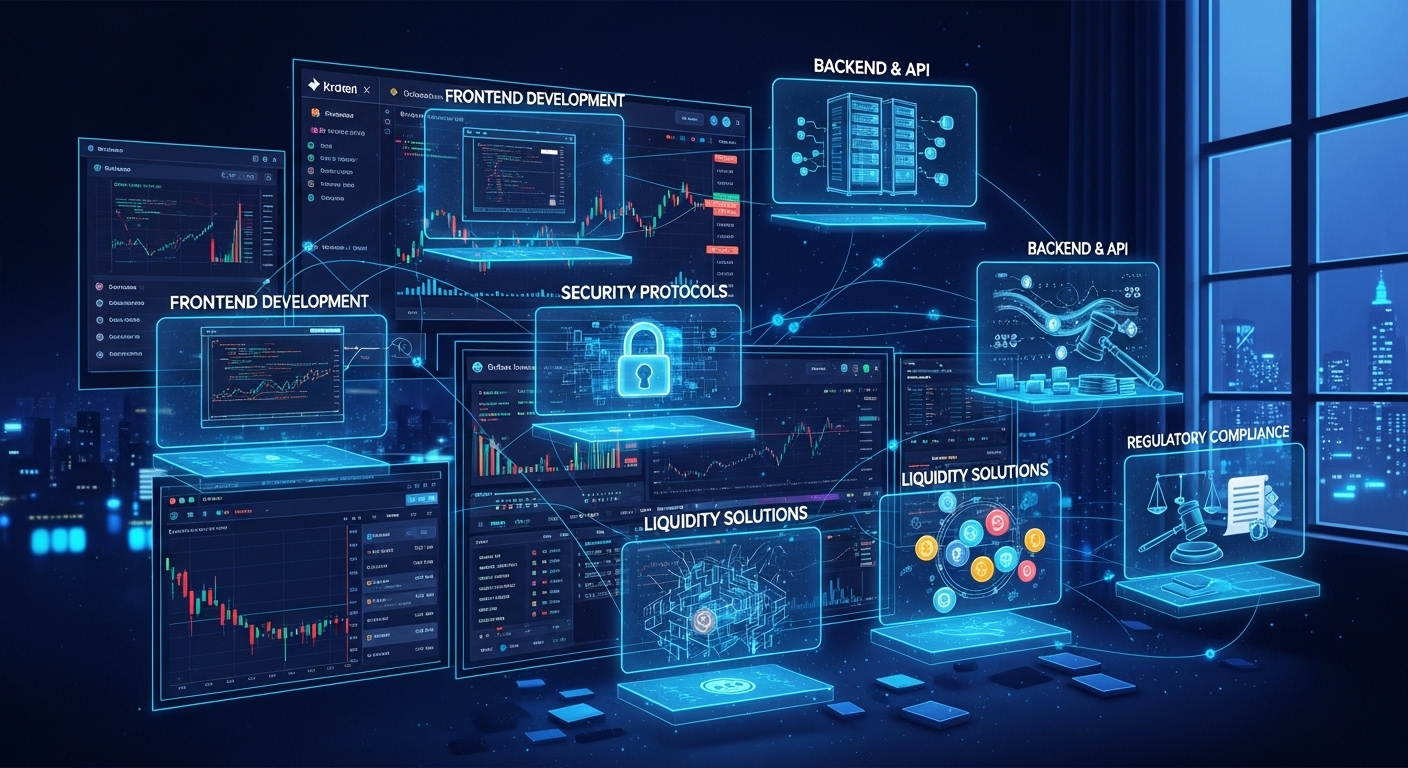


The cryptocurrency market continues to expand as digital assets gain global adoption across trading, payments, and decentralized finance. Crypto exchanges serve as the foundation of this ecosystem by enabling users to buy, sell, and manage digital currencies efficiently. Platforms like Kraken have set industry standards with advanced security, regulatory compliance, high liquidity, and a user-friendly trading environment. Entrepreneurs and fintech businesses are increasingly exploring opportunities to launch similar platforms that deliver reliable trading experiences to global users. Building such a platform requires more than basic software development it demands deep knowledge of blockchain integration, trading engine performance, compliance frameworks, and secure asset management. This guide explains the essential steps, technologies, and features involved in building a crypto exchange like Kraken while outlining practical considerations for businesses planning a scalable digital asset trading platform.
Understanding the Business Model of a Crypto Exchange
A successful crypto exchange begins with a clearly defined business model that supports long-term growth and financial sustainability. Exchanges generate revenue through various trading services, platform utilities, and premium offerings designed for different types of traders. Understanding how platforms like Kraken structure their revenue streams helps entrepreneurs design a platform that balances user value with operational profitability. A strong business model also guides pricing strategies, service offerings, and user acquisition methods. Businesses planning to launch a trading platform must evaluate how their exchange will attract traders while maintaining consistent income.
- Trading Fee Structure
Exchanges typically earn revenue by charging a small percentage for each trade executed on the platform. Maker and taker fees are common models where liquidity providers pay lower fees than liquidity takers. A carefully balanced fee structure encourages trading activity while maintaining profitability. - Listing Fees and Token Partnerships
Many exchanges generate revenue through token listing fees charged to blockchain projects seeking market exposure. Strategic partnerships with emerging crypto projects can increase user interest and expand trading pairs available on the platform. - Margin Trading and Lending Services
Advanced exchanges provide margin trading features that allow users to borrow funds to increase trading positions. Interest generated through lending and margin services becomes an additional revenue stream for the platform. - Premium Services and Institutional Accounts
Institutional trading accounts often require advanced analytics tools, API access, and higher liquidity levels. Offering premium features for professional traders creates additional value and helps diversify revenue sources.
Choosing the Right Type of Crypto Exchange
Selecting the right exchange model determines how the platform operates, how transactions are processed, and how users interact with the system. Each exchange type has its own advantages related to security, transparency, transaction speed, and regulatory requirements. Understanding the differences between centralized, decentralized, hybrid, and peer-to-peer exchanges helps businesses identify the structure that best aligns with their business goals. The chosen model also influences development complexity, compliance requirements, and user trust levels within the platform’s ecosystem.
- Centralized Exchanges (CEX)
Centralized exchanges operate with a governing authority that manages transactions, user accounts, and security infrastructure. They offer faster transaction processing, higher liquidity, and advanced trading features that appeal to professional traders. - Decentralized Exchanges (DEX)
Decentralized exchanges operate through smart contracts and blockchain networks without a central authority. Users maintain full control of their assets, and transactions occur directly between wallets. This model emphasizes transparency and security. - Hybrid Exchanges
Hybrid platforms combine elements of centralized and decentralized systems. They aim to provide the performance benefits of centralized platforms while preserving the security and privacy features of decentralized networks. - Peer-to-Peer Exchanges
Peer-to-peer exchanges enable direct transactions between buyers and sellers without intermediaries. Escrow mechanisms protect both parties during the trade process, making these platforms suitable for users seeking direct crypto transactions.
Key Features Required in a Crypto Exchange Platform
The functionality of a crypto exchange platform directly influences the overall user experience and trading efficiency. Modern exchanges must offer a range of advanced features that support secure trading, accurate market data, and smooth transactions. Users expect reliable order execution, transparent price tracking, and easy account management tools within a single interface. Developing these features requires strong backend architecture and a user-friendly frontend design. Businesses aiming to compete with established exchanges must prioritize feature-rich systems that serve both beginner traders and experienced market participants.
- High-Performance Trading Engine
The trading engine is the core component responsible for matching buy and sell orders instantly. A powerful engine processes thousands of transactions per second, ensuring smooth execution even during high-volume market activity. - Secure Wallet Integration
Exchanges must support both hot and cold wallet storage systems. Hot wallets enable quick transactions, while cold wallets store large reserves offline to protect assets from potential cyber threats. - Advanced Trading Dashboard
A professional trading interface provides real-time charts, order books, price alerts, and market analytics. These tools help traders make informed decisions while maintaining a smooth user experience. - Liquidity Management System
Adequate liquidity ensures users can execute trades quickly without significant price fluctuations. Integrating liquidity providers or market-making systems can improve order execution efficiency.
Security Measures for Crypto Exchange Development
Security plays a central role in the credibility and reliability of any cryptocurrency exchange. Because exchanges manage large volumes of digital assets and sensitive financial data, they are often targeted by cyber threats. Implementing strong security systems during development helps prevent unauthorized access, financial loss, and data breaches. A well-secured exchange builds trust among traders and strengthens the platform’s reputation within the crypto market. Businesses launching exchanges must integrate multiple security layers that protect both user accounts and the overall platform infrastructure.
- Multi-Layer Authentication
Strong authentication mechanisms such as two-factor authentication, biometric verification, and secure login protocols help protect user accounts from unauthorized access. - Cold Storage Asset Protection
Storing the majority of digital assets in offline cold wallets significantly reduces the risk of hacking incidents. Exchanges typically maintain only a small portion of funds in online wallets for active trading. - End-to-End Data Encryption
Encryption protects sensitive user data, including login credentials and transaction records. Implementing advanced encryption protocols strengthens the platform’s defense against cyber threats. - Continuous Security Audits
Regular vulnerability assessments and penetration testing identify potential weaknesses in the platform. Ongoing audits ensure that security measures remain effective as the exchange evolves.
Technology Stack for Building a Crypto Exchange
The technology stack forms the backbone of a crypto exchange platform. Choosing the right combination of development tools, frameworks, and infrastructure ensures the system can handle high transaction volumes without compromising speed or reliability. Exchanges must operate continuously with minimal downtime, making scalable architecture and efficient database management essential. A carefully selected technology stack allows developers to integrate blockchain networks, build responsive interfaces, and maintain secure transaction processing. Businesses should evaluate technologies that support long-term scalability and system performance.
- Backend Development Technologies
Programming languages such as Python, Node.js, and Go are commonly used for backend development due to their performance and scalability capabilities. These technologies support real-time transaction processing. - Frontend Frameworks
Modern frameworks like React or Angular provide responsive and intuitive user interfaces. A well-designed frontend improves user engagement and simplifies complex trading operations. - Blockchain Integration
Exchanges must integrate multiple blockchain networks to support different cryptocurrencies. Reliable APIs and node infrastructure enable seamless deposits, withdrawals, and transaction verification. - Database and Cloud Infrastructure
Scalable database systems and cloud platforms help manage large datasets, trading histories, and user accounts. Cloud infrastructure ensures consistent uptime and flexible resource management.
Regulatory Compliance and Legal Considerations
Regulatory compliance is an essential component of operating a cryptocurrency exchange. Governments and financial authorities require exchanges to follow strict guidelines designed to prevent fraud, financial crime, and illegal transactions. Meeting these requirements ensures the platform operates legally while building trust with users and investors. Compliance procedures may vary across regions, making legal consultation and regulatory research an important step before launching the platform. Exchanges that prioritize regulatory alignment often gain credibility and long-term stability in the global crypto market.
- Know Your Customer (KYC) Verification
Identity verification processes ensure that users comply with financial regulations and reduce the risk of fraudulent activity on the platform. - Anti-Money Laundering (AML) Compliance
AML policies monitor transactions and detect suspicious financial activities. Implementing automated monitoring tools helps maintain regulatory compliance. - Licensing Requirements
Many countries require exchanges to obtain financial service licenses before operating legally. Understanding regional regulations prevents legal complications during expansion. - Data Protection Regulations
Exchanges must comply with data privacy laws to protect user information. Secure data management practices build trust among traders and regulators alike.
Development Process for Building a Crypto Exchange
Developing a cryptocurrency exchange requires a structured process that moves from research and planning to deployment and ongoing improvements. Each development phase focuses on creating a reliable system capable of managing digital assets, executing trades, and supporting large user bases. Clear development planning reduces risks and ensures the platform meets industry standards for security and performance. Businesses that follow a systematic development process are better prepared to launch a scalable trading platform that adapts to changing market demands.
- Market Research and Planning
Conducting market research helps identify target users, preferred trading features, and potential competitors. Strategic planning creates a strong foundation for development. - Platform Architecture Design
Designing a scalable architecture ensures the exchange can support future growth. Proper system architecture also simplifies feature expansion and upgrades. - Testing and Quality Assurance
Comprehensive testing ensures that trading systems, wallet integrations, and security mechanisms function correctly before launch. - Deployment and Continuous Improvement
After launch, ongoing monitoring and updates help improve performance, add new trading pairs, and enhance the user experience.
Importance of Choosing the Right Development Partner
Launching a professional crypto exchange platform requires advanced technical expertise and deep understanding of blockchain systems. Many businesses rely on experienced development partners to manage complex tasks such as trading engine development, wallet integration, and security implementation. A reliable development partner provides guidance throughout the project while ensuring the platform meets industry standards. Working with an experienced team also reduces development risks and improves the chances of building a stable and scalable trading platform.
- Specialized Blockchain Knowledge
Experienced development teams understand blockchain networks, wallet integrations, and smart contract frameworks necessary for building secure exchanges. - Custom Platform Development
Businesses often require customized features tailored to their trading strategy and user base. A professional crypto exchange development company can design scalable solutions aligned with business goals. - Security-Focused Development Approach
Skilled developers implement strong security protocols during the development process rather than adding them as later enhancements. - Long-Term Technical Support
Ongoing maintenance, system upgrades, and security monitoring are essential for operating a reliable exchange. Partnering with a trusted crypto exchange development company helps maintain long-term platform stability.
Cost Factors in Crypto Exchange Development
The cost of building a crypto exchange depends on multiple factors including feature complexity, technology infrastructure, compliance requirements, and security implementation. Understanding these cost elements helps businesses create realistic budgets and development timelines. While launching an exchange requires significant investment, proper planning ensures that development resources are used efficiently. Businesses must consider both initial development costs and long-term operational expenses when planning their trading platform strategy.
- Platform Complexity and Features
Advanced trading tools, margin trading, staking, and analytics dashboards can increase development costs but also enhance platform value. - Security Infrastructure Investment
Implementing enterprise-level security solutions, encryption protocols, and cold storage systems requires additional investment but significantly improves trust. - Regulatory Compliance Expenses
Licensing fees, legal consultations, and compliance systems add to the total cost of launching the exchange. - Development Team Expertise
Working with an experienced crypto exchange development company may require higher initial investment, but it ensures a stable and secure platform.
Strategies for Scaling and Growing the Exchange
After launching the exchange, businesses must focus on strategies that attract new users and increase trading volume. Growth requires continuous innovation, strong liquidity management, and effective marketing initiatives that strengthen the platform’s reputation. Exchanges that adapt to evolving market trends can expand their user base while maintaining competitive advantages. Long-term success depends on the ability to scale infrastructure, introduce new trading services, and maintain strong user engagement across global markets.
- Global Market Expansion
Supporting multiple currencies and regional payment systems helps attract international traders and broaden the user base. - Liquidity Partnerships
Collaborating with liquidity providers ensures stable trading environments and reduces market volatility. - User Incentive Programs
Referral rewards, trading competitions, and loyalty programs encourage active participation on the platform. - Continuous Feature Innovation
Adding staking, futures trading, and DeFi integrations keeps the exchange competitive. Many businesses rely on a reliable crypto exchange development company to introduce these new features efficiently.
Conclusion
Building a crypto exchange like Kraken involves a combination of strategic planning, strong technical infrastructure, advanced security systems, and regulatory compliance. From defining the exchange model to implementing trading engines and wallet integrations, every step contributes to creating a reliable trading environment for users. Businesses entering the cryptocurrency market must focus on scalability, security, and user experience to compete with established platforms. With proper planning and support from an experienced development team, launching a secure and efficient crypto trading platform becomes a realistic opportunity in the growing digital asset ecosystem.





Add Comment