













Introduction
Innovative design techniques in wind power projects IEEE play a key role in developing efficient and reliable renewable energy systems. Instead of focusing only on theoretical concepts, students can understand how wind energy is captured, converted, and integrated into modern power systems.

With the rapid growth of smart energy technologies, these projects help students gain practical knowledge and real-time experience, preparing them for advanced roles in the renewable energy sector.
Understanding Wind Power Project Concepts
Wind power projects are based on converting kinetic energy from wind into electrical energy using turbines, generators, and control systems. By working with these components, students learn how energy is generated, controlled, and delivered efficiently.
This hands-on approach helps in understanding system design, energy conversion processes, and performance optimization in real-time environments, building a strong technical foundation.
Innovative Design Techniques to Explore
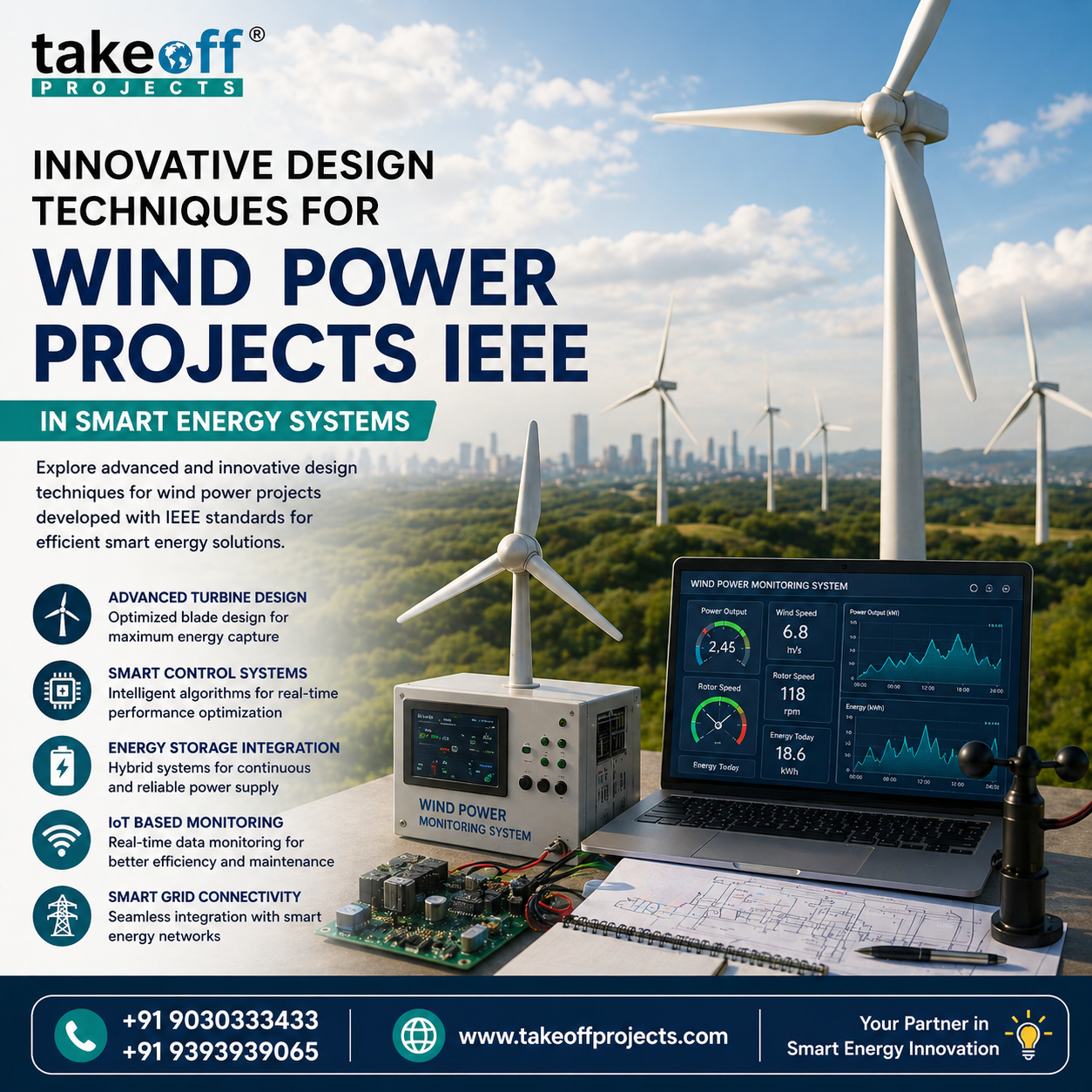
Students can implement modern and advanced design techniques based on IEEE standards. Common approaches include smart monitoring systems, optimized turbine design, hybrid energy integration, automated control mechanisms, and real-time performance tracking.
These wind power projects reflect real-world applications and help students understand how smart energy systems operate in modern infrastructure.
Skills Developed Through Practical Work
Working on wind power projects helps students build both technical and analytical skills. They learn how to design systems, analyze performance, and solve practical challenges.
Key skills gained include:
• System design and implementation
• Analytical thinking and troubleshooting
• Understanding of energy conversion systems
• Communication and presentation skills
These skills are essential for successfully working on wind power projects and handling real-world engineering problems.
Guidance and Learning Support
Many students require proper guidance to complete projects effectively. With the right support, they can understand concepts clearly and execute their ideas successfully.
Support includes project selection, step-by-step implementation guidance, reference materials, and complete documentation for academic submission. This ensures students can complete their projects with confidence and accuracy.
Advantages of Wind Power Projects
Wind power projects provide several benefits that enhance both learning and career development. They help students understand modern energy systems and improve their technical capabilities.
Some key advantages include:
• Better understanding of renewable energy systems
• Improved problem-solving and technical skills
• Increased confidence in project execution
• Exposure to smart energy technologies
Career Scope in Smart Energy Systems
The demand for renewable energy professionals is increasing rapidly. Students with knowledge of wind power systems can explore careers in system design, energy management, maintenance, and smart grid technologies.
This field offers long-term career opportunities and allows individuals to contribute to sustainable and innovative energy solutions.
Conclusion
Innovative design techniques for wind power projects IEEE help students combine theoretical knowledge with practical experience. These projects enhance technical skills, improve understanding of real-world systems, and prepare students for future careers in smart energy systems. With proper guidance, students can successfully complete projects and build a strong foundation in renewable energy technologies





Add Comment