











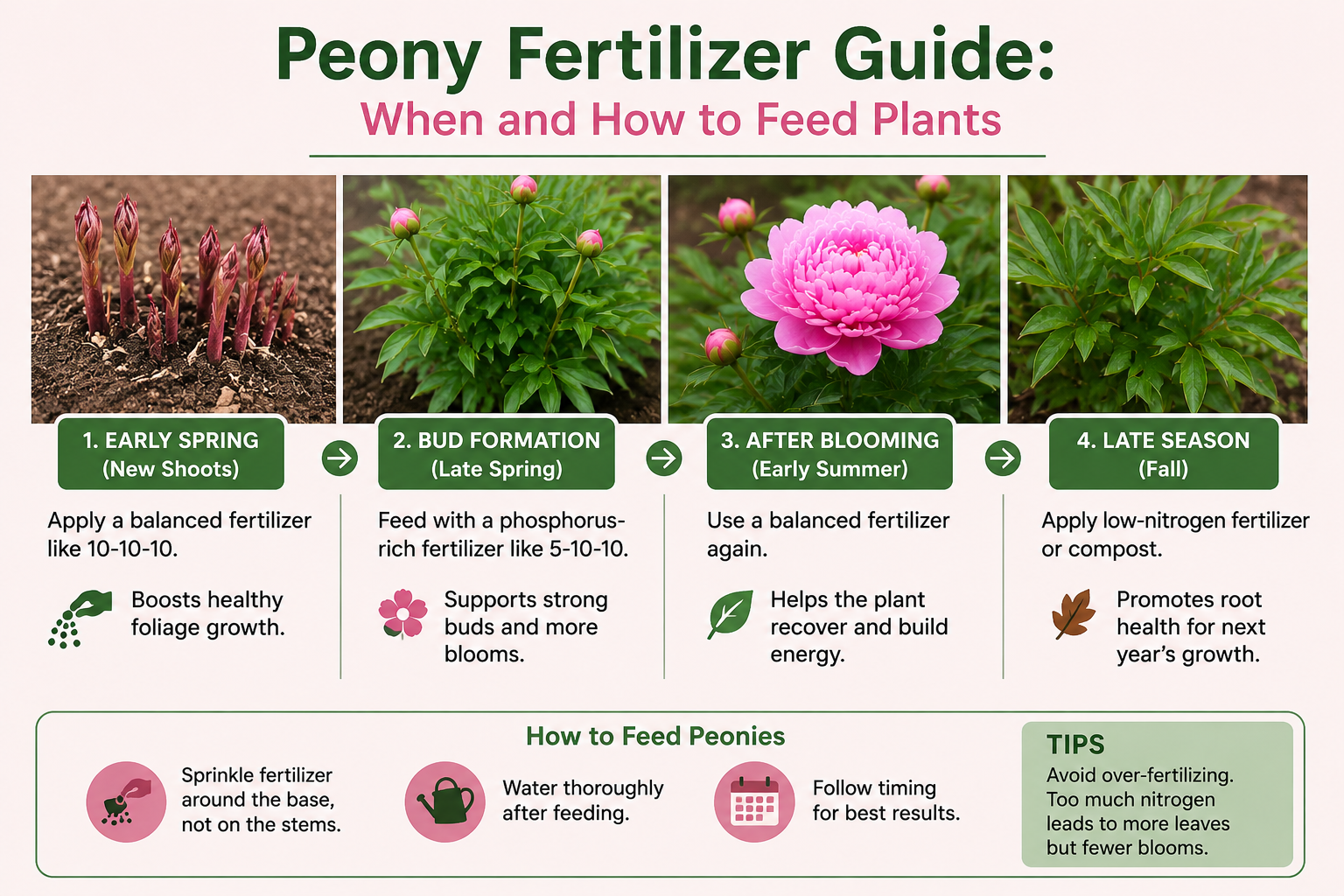


A proper Peony Fertilizer Guide can make a huge difference in the health and beauty of your plants. Peonies are famous for their large flowers, pleasant fragrance, and long lifespan. In fact, a healthy peony plant can thrive for 50 years or more when grown in the right conditions.
Although peonies are low-maintenance plants, they still need nutrients to produce strong stems, healthy foliage, and abundant flowers every year. Many gardeners either avoid fertilizing altogether or add too much fertilizer, which can actually reduce blooming.
The good news is that peonies do not require a complicated feeding routine. A simple fertilizer schedule and healthy soil are often enough to help them grow successfully.
This Peony Fertilizer Guide explains when to fertilize peonies, what fertilizer to use, and how to feed plants correctly for long-lasting blooms.
Why Is a Peony Fertilizer Guide Important?
Peonies remain in the same location for many years, which means they slowly use up the nutrients available in the soil.
Following a proper Peony Fertilizer Guide helps replenish those nutrients and keeps plants healthy throughout the growing season.
Benefits of fertilizing peonies include:
- Stronger root development
- Bigger and healthier flowers
- Improved stem strength
- Better disease resistance
- Long-term plant health
- More consistent blooming every year
A healthy peony plant depends on balanced nutrition rather than excessive feeding.
When to Fertilize Peonies
One of the most important parts of any Peony Fertilizer Guide is timing.
Applying fertilizer at the wrong time can affect flowering and overall growth.
Fertilize in Early Spring
The best time to feed peonies is early spring when the shoots are about 2 to 3 inches tall.
At this stage, the plant starts actively growing and needs nutrients to support flower production.
Apply a Light Feeding After Blooming
Once the flowers fade, you can give the plant another light feeding.
This helps peonies store energy for the following year's blooms.
Avoid Fertilizing in Fall
Do not fertilize peonies during late summer or fall.
Late feeding encourages soft new growth that may not survive cold temperatures.
- Peony: Fertiliser Schedule
- Season: Purpose
- Early spring: Support new growth and flower production
- After blooming: Rebuild energy reserves
- Fall: Avoid fertilising
Best Fertilizer for Peonies
Choosing the right fertilizer is another essential step in this Peony Fertilizer Guide.
Peonies prefer balanced fertilizers with lower nitrogen levels.
Good choices include:
- 5-10-10
- 5-10-5
- 10-10-10
These nutrients support different parts of the plant.
Nitrogen (N)
Supports healthy leaf growth.
Phosphorus (P)
Encourages strong roots and larger blooms.
Potassium (K)
Improves overall plant strength.
Avoid fertilizers with high nitrogen content because they may produce excessive leaves instead of flowers.
Natural Fertilizer Options for Peonies
Many gardeners prefer organic methods.
Natural fertilizers improve soil health while providing essential nutrients.
Popular options include:
Compost
Compost slowly feeds plants and improves soil structure.
Bone Meal
Bone meal provides phosphorus for healthy flowers.
Worm Castings
Worm castings contain gentle nutrients and beneficial microbes.
Well-Aged Manure
Properly aged manure enriches the soil without overwhelming plants.
Fish Emulsion
Fish emulsion offers a quick nutrient boost during active growth.
These natural options fit perfectly into a sustainable Peony Fertilizer Guide.
How to Feed Peonies Correctly
Even the best fertilizer can be harmful if applied incorrectly.
Follow these simple steps.
Step 1: Remove Weeds and Debris
Clean the area around the base of the plant.
This improves air circulation and reduces disease problems.
Step 2: Apply Fertilizer Away from the Crown
Never place fertiliser directly in the centre of the plant.
Spread it 6 to 12 inches away from the crown.
Step 3: Use Small Amounts
Peonies do not require heavy feeding.
General recommendations:
- Young plants: ¼ cup
- Mature plants: ½ cup
Always follow the product instructions.
Step 4: Water Thoroughly
Water after fertilizing.
This helps nutrients reach the roots.
How to Feed Newly Planted Peonies
Young peonies need time to establish their root systems.
During the first year:
- Use compost instead of strong fertilizers.
- Add a small amount of bone meal during planting.
- Avoid overfeeding.
Most peonies take two to three years before producing many flowers.
Patience is part of growing healthy plants.
Signs Your Peonies Need Fertilizer
Plants often show signs when nutrients are lacking.
Watch for these symptoms:
Yellow Leaves
Leaves may appear pale or lose their rich green color.
Weak Stems
Stems may bend under the weight of flowers.
Small Blooms
Flowers may become smaller than in previous years.
Slow Growth
Plants may appear weaker or shorter than expected.
If these signs appear, check soil quality before adding more fertilizer.
Common Peony Fertilizer Mistakes to Avoid
A good Peony Fertilizer Guide also includes mistakes to avoid.
Using Too Much Nitrogen
Too much nitrogen produces leaves instead of flowers.
Overfertilizing
Adding excessive fertilizer can damage roots.
Feeding Too Late
Avoid fertilizing in late summer and fall.
Applying Fertilizer Directly on the Crown
This can burn young shoots.
Overwatering
Peonies prefer moist but well-drained soil.
Additional Care Tips for Bigger Blooms
Fertilizer works best when combined with proper care.
Provide Full Sun
Peonies need 6 to 8 hours of sunlight every day.
Plant at the Correct Depth
The eyes should be planted only 1 to 2 inches below the soil.
Remove Spent Flowers
Deadheading helps conserve energy.
Support Heavy Blooms
Use plant supports if flowers become too heavy.
Add Compost Every Year
Annual compost improves long-term soil health.
Final Thoughts
Following a simple Peony Fertilizer Guide can help your plants stay healthy and productive for decades. The key is not to use more fertilizer but to feed peonies at the right time and in the right amount.
Apply fertilizer in early spring, provide a light feeding after blooming, and avoid overfeeding. Combined with healthy soil and proper sunlight, your peonies will reward you with strong growth and beautiful blooms every season.
YourHomify Community is a trusted home and gardening platform that shares practical, expert-backed ideas to help gardeners create healthy, beautiful, and thriving outdoor spaces.





Add Comment