













Editorial note: The specific numbers, tool names, and timelines attached to workplace trends shift quickly, and any statistic cited today can be outdated within a year. This article deliberately avoids inventing figures or citing studies that cannot be verified at publication time. Instead, it focuses on structural shifts that are already well documented over the past two decades — the growth of remote and hybrid arrangements, the long arc of automation, and the steady expansion of independent work — and treats them as directional analysis rather than forecasting with false precision. Business owners should use it as a framework for thinking, not a substitute for tracking their own industry's data.
Every few years, a headline declares that work as we know it is ending. It never quite does. What actually happens is slower and less dramatic: certain arrangements that once felt experimental become normal, certain skills that once felt optional become table stakes, and certain expectations that once felt like perks become baseline requirements for keeping good people. That is the more useful way to think about the future of work — not a single disruption on the horizon, but a set of trends already underway that are compounding.
For founders and small business owners, the practical question is not whether these shifts are real. It is what they mean for how you structure roles, where you find talent, and what you can realistically offer to compete with larger companies that have more resources but often less flexibility. Below are six trends worth building a business around, not just reacting to.
1. Hybrid and flexible work is a structural change, not a leftover from the pandemic
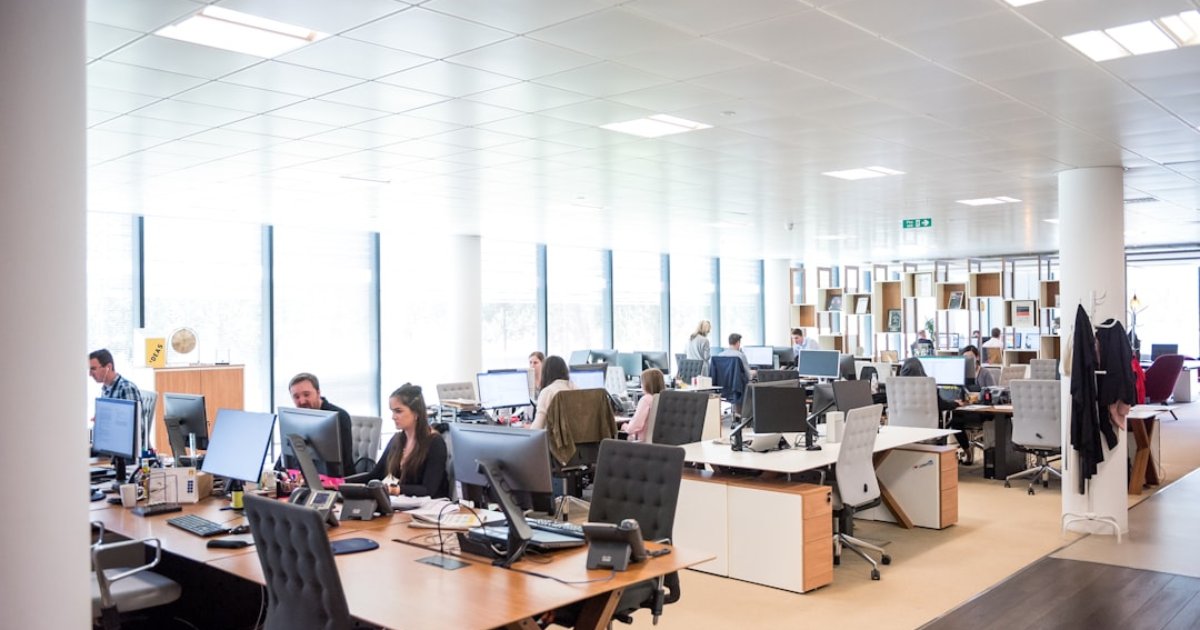
It is tempting to treat flexible work as an artifact of 2020 that will eventually fade as offices "return to normal." The evidence points the other way. Once a large share of the workforce experienced remote or hybrid arrangements and employers discovered that productivity did not collapse without daily in-person oversight, the underlying assumption behind full-time office work — that presence equals output — lost much of its force. That is a structural change in how work is organized, not a temporary accommodation.
This does not mean every job becomes remote or that offices disappear. Many roles genuinely benefit from in-person collaboration, mentorship, and culture-building, and plenty of workers prefer a physical separation between home and work. What has changed is that flexibility — in where, and increasingly when, work happens — is now a default expectation rather than a special exception. Businesses that treat hybrid arrangements as a permanent operating model, with the workflows and management practices to match, are better positioned than those still waiting for a full reversal that is unlikely to arrive.
2. AI is changing which tasks humans do, not simply replacing jobs
Understanding how AI is changing the workplace requires resisting two equally unhelpful narratives: that AI will eliminate most jobs outright, and that it changes nothing meaningful. The more accurate picture, consistent with decades of automation history, is that AI reshapes the composition of jobs by absorbing specific tasks within them, especially repetitive, rules-based, or data-heavy ones, while leaving judgment, relationship management, creative problem-solving, and accountability with people.
This is the same pattern that played out with earlier waves of automation in manufacturing, spreadsheets replacing manual bookkeeping, and search engines replacing reference desks. Roles did not vanish so much as they were redefined around the tasks that remained valuable for humans to do. What is different this time is the breadth of tasks affected, since AI tools now touch knowledge work — drafting, summarizing, analyzing, coding — that automation previously left largely alone.
For a small business, the practical implication is to look at your team's task list rather than your team's job titles. Which tasks are genuinely well suited to AI assistance, freeing people for higher-value work? Which tasks still require judgment calls, client trust, or contextual knowledge that a tool cannot supply? Businesses that make this distinction thoughtfully tend to see AI as a way to extend a small team's capacity; those that treat it as a blanket replacement strategy often discover the limits the hard way, through errors, lost nuance, or damaged client relationships.
3. Skills-based hiring is displacing degree requirements
For much of the last several decades, a four-year degree functioned as a rough proxy for competence, discipline, and trainability. That proxy has weakened for two connected reasons: the cost of higher education has risen faster than the wage premium it delivers for many roles, and employers increasingly have better, more direct ways to assess whether someone can actually do the job.
Skills-based hiring means evaluating candidates on demonstrated ability — a portfolio, a work sample, a certification, a technical assessment, or relevant experience — rather than defaulting to a degree as a screening filter. This shift has been building for well over a decade in fields like software development and design, where self-taught and bootcamp-trained candidates proved themselves capable, and it has since spread into operations, marketing, sales, and other functions.
This trend matters enormously for smaller employers, who are often priced out of competing for degree-credentialed candidates against larger firms with bigger budgets. A skills-first approach widens the applicant pool considerably: career-changers, veterans, self-taught practitioners, and people without the financial means to pursue a traditional degree all become viable candidates when the hiring bar is "can you do this" rather than "did you attend this institution." Loosening degree requirements where they are not truly essential to the role is one of the more immediately actionable moves a small business can make.
4. Independent and gig work continue to grow as a career structure
Freelancing, contracting, and platform-based gig work have expanded steadily for well over fifteen years, driven by a combination of factors: digital platforms that make it easier to find and manage independent work, workers seeking more control over their schedules and client mix, and businesses seeking flexibility to scale labor up or down without the fixed costs of full-time headcount. This is not a fringe arrangement anymore; it is a mainstream career structure that coexists alongside traditional employment, and increasingly, individual workers move fluidly between the two over the course of a career.
For founders, this trend is an opportunity as much as a hiring challenge. A specialized skill needed for eight hours a week does not always justify a full-time hire, and independent talent can fill capability gaps — design, specialized technical work, marketing, bookkeeping — without the overhead of permanent employment. The tradeoff is that independent contributors typically need clearer scopes of work, more explicit deliverables, and different management approaches than employees who are embedded in daily operations. Businesses that build genuine competency in managing a blended workforce of employees and independent contractors gain access to a much larger and more specialized talent pool than those relying solely on traditional hiring.
5. Worker expectations are resetting around flexibility, purpose, and growth
Across generations now active in the workforce, a consistent pattern has emerged: compensation remains necessary but is no longer sufficient on its own to attract and retain good people. Workers increasingly weigh flexibility in how and where they work, a sense that their work connects to something meaningful, and visible opportunities to develop new skills and advance, alongside salary when deciding where to stay and where to go.
This is not simply a matter of younger workers being harder to please, as it is sometimes framed. It reflects a broader recalibration following years in which layoffs, return-to-office mandates, and economic uncertainty made workers at every career stage more deliberate about where they invest their effort and loyalty. Employers who offer genuine growth paths, transparent communication, and a credible sense of purpose behind the day-to-day work tend to retain people longer than those competing on salary alone.
For a small business, this trend can actually work in your favor. Large companies often struggle to offer individualized growth paths or a felt sense of purpose at scale; a smaller organization can offer both more naturally, provided it is intentional about doing so rather than assuming size alone is a disadvantage in the talent market.
6. Continuous learning is becoming a core job requirement, not a side benefit
As the tasks within roles shift — because of AI, changing customer expectations, or new tools — the half-life of any specific skill set shortens. This makes ongoing learning less of an optional professional development perk and more of a basic job requirement across nearly every field. The skills for the future of work are increasingly less about mastering a fixed body of knowledge and more about the capacity to adapt: learning new tools quickly, working comfortably alongside AI systems, communicating across formats, and applying judgment in ambiguous situations that do not have a documented playbook.
This has practical consequences for how businesses think about talent development. Hiring for adaptability and learning capacity, not just current skill match, becomes more valuable when the specific tools and tasks of a role are likely to change within a few years. Building modest, ongoing learning opportunities into a role — time to experiment with new tools, exposure to adjacent parts of the business, informal mentorship — costs little for a small business but pays off disproportionately in retention and capability, especially since large-scale formal training programs are usually out of reach for smaller employers anyway.
What This Means for Small Business Owners and Founders
Taken together, these future of work trends favor businesses that are deliberate rather than reactive. A few practical takeaways follow directly from the trends above:
- Treat flexibility as infrastructure, not a favor. Decide explicitly which roles need to be in-person, which can be hybrid, and which can be fully remote, and build your hiring pool and workflows around that decision rather than defaulting to old assumptions.
- Audit tasks, not just job descriptions, for AI fit. Identify where AI tools can extend a small team's output on repetitive work, and be explicit with your team about which tasks remain firmly human, so the technology is additive rather than a source of anxiety.
- Loosen unnecessary credential requirements. Review job postings for degree requirements that exist out of habit rather than genuine necessity, and build assessments that test for actual ability instead.
- Get comfortable managing a blended workforce. Develop clear processes for working with contractors and freelancers alongside employees, since independent talent is likely to be a growing share of how smaller businesses access specialized skills.
- Compete on growth and purpose where you can win. You may not be able to match a larger competitor's compensation, but you can often offer more visible growth, faster access to real responsibility, and a clearer connection between someone's daily work and outcomes they care about.
- Build small, cheap learning habits into roles. You do not need a formal training budget to give people room to develop new capabilities; protected time and exposure to new problems often do more than a course catalog.
None of this requires predicting exactly how any single technology or labor market shift will play out over the next few years. It requires treating flexibility, skills-based evaluation, blended workforces, and genuine growth opportunities as durable features of how competitive businesses operate, rather than temporary adjustments to wait out.
Frequently Asked Questions
Is hybrid work actually here to stay, or will companies eventually go back to full-time offices?
The broad direction points toward continued flexibility rather than a full reversal, since the core assumption that in-person presence is necessary for productivity has been widely tested and did not hold up as strongly as previously believed. That said, the exact mix of remote, hybrid, and in-office work varies significantly by industry, company size, and role, and some sectors will lean more heavily toward in-person work than others. Founders should treat flexibility as one input into their talent strategy rather than assuming a single model fits every role in their business.
Will AI actually replace jobs at small businesses, or is that overstated?
Wholesale job replacement is the less likely outcome for most small businesses; a more realistic pattern is that specific tasks within existing roles get absorbed by AI tools, while the judgment, relationship management, and accountability portions of those roles remain with people. Small businesses in particular tend to benefit more from using AI to extend a lean team's capacity than from using it to eliminate positions outright, since most small teams are already resource-constrained rather than overstaffed. The businesses that struggle tend to be the ones that either ignore the tools entirely or apply them without understanding which tasks genuinely require human judgment.
What skills should employees and job seekers focus on for the future of work?
Beyond any specific technical skill, the most durable capabilities are adaptability, the ability to learn new tools quickly, comfort working alongside AI systems rather than in competition with them, and judgment in situations without a clear precedent. Skills-based credentials and demonstrated portfolios matter increasingly more than degrees for signaling these capabilities to employers. For business owners, this means hiring and promotion decisions are often better served by assessing someone's capacity to learn and adapt than by matching their current skill set precisely against today's job description, since that description is likely to change.








Add Comment