











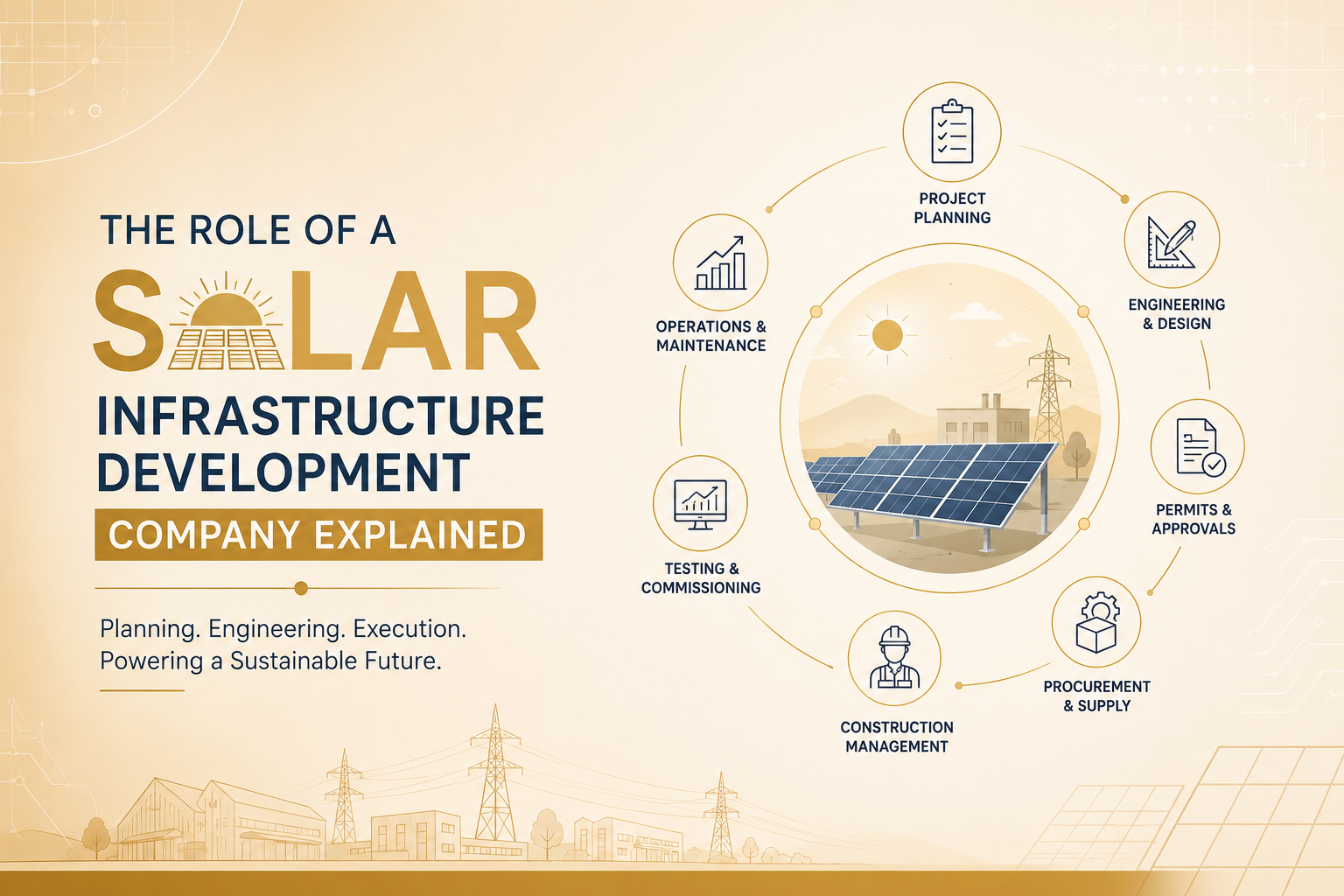


Solar power projects often look simple from a distance. Rows of panels, a few inverters, and electricity flowing into the grid. The reality is very different. Every successful solar plant begins with months of planning, technical studies, approvals, engineering decisions, and construction coordination before the first panel is installed.
Many businesses, industries, and investors underestimate what happens behind the scenes. Missing a land assessment, choosing the wrong electrical design, or delaying permits can affect project cost, timelines, and long-term energy production.
This is where a solar infrastructure development company becomes an essential partner. Instead of managing dozens of contractors independently, project owners work with specialists who coordinate every stage, from concept to commissioning.
This guide explains what these companies do, why their role matters, and how they contribute to successful renewable energy projects.
Why Solar Infrastructure Development Matters
Building a solar power plant is much more than purchasing equipment. Every decision made during planning affects future performance.
A well-developed project considers:
- Land suitability
- Grid connectivity
- Environmental conditions
- Electrical infrastructure
- Financial feasibility
- Future maintenance
Skipping detailed planning can lead to redesigns, unexpected expenses, or lower energy output.
Professional solar project development services help organize these activities into a structured process, reducing unnecessary delays while supporting long-term project performance.
What Does a Solar Infrastructure Development Company Do?
A solar infrastructure development company oversees the complete lifecycle of a solar project.
Their responsibilities usually include:
- Site identification
- Land evaluation
- Feasibility studies
- Engineering design
- Government approvals
- Procurement planning
- Construction supervision
- Testing and commissioning
- Grid synchronization
Rather than handling only installation, they coordinate technical, commercial, and regulatory work from beginning to end. For utility-scale projects, industrial rooftop systems, and commercial solar parks, this coordinated approach becomes increasingly valuable.
Solar Project Planning Comes Before Construction
Many people think construction starts immediately after selecting land. In reality, solar project planning and development often take several months before physical work begins.
Typical planning activities include:
- Solar irradiation analysis
- Topographical surveys
- Soil investigation
- Drainage studies
- Transmission planning
- Energy generation estimates
- Financial modelling
- Risk assessment
These studies help determine whether the project can deliver expected returns over its operating life. Without proper planning, even expensive equipment cannot compensate for poor site decisions.
The Engineering Behind Every Successful Solar Plant
Engineering connects planning with execution. During solar EPC project development, engineers prepare detailed technical drawings covering electrical layouts, structural foundations, inverter sizing, cable routing, transformer selection, and protection systems.
Every component must work together safely and efficiently. Modern engineering also considers future expansion, maintenance accessibility, weather conditions, and local regulations. Good engineering reduces operational issues after commissioning and simplifies future maintenance.
Managing Hundreds of Moving Parts
Large solar projects involve multiple teams working simultaneously.
Typical participants include:
- Civil contractors
- Structural engineers
- Electrical engineers
- Procurement teams
- Equipment suppliers
- Utility companies
- Government authorities
- Quality inspectors
Keeping these groups aligned requires experienced solar project management services. Project managers monitor schedules, coordinate deliveries, review construction quality, solve site issues, and communicate progress with investors and stakeholders. This organized approach helps projects move forward without unnecessary interruptions.
Solar Energy Project Management Supports Long-Term Success
Construction may last only a few months, but a solar plant is expected to generate electricity for decades. That is why solar energy project management extends beyond construction.
It typically includes:
- Performance monitoring
- Documentation management
- Compliance reporting
- Safety inspections
- Contractor coordination
- Warranty tracking
- Operational reviews
These activities help maintain consistent plant performance while supporting future upgrades when required.
Local Expertise with Global Project Standards
Every region presents unique challenges.
For example, projects developed by a solar infrastructure development company in Kutch often account for high solar irradiation, dry climate conditions, open land availability, and growing renewable energy infrastructure.
At the same time, developers increasingly adopt international engineering practices, advanced monitoring systems, and globally accepted quality standards.
This combination of local understanding and global project methods supports investors planning both regional installations and larger renewable portfolios.
Solar Power Plant Development Creates Value Beyond Electricity
Solar power plant development contributes to much more than energy generation.
Well-developed projects can provide:
- Lower long-term electricity costs
- Reduced dependence on conventional fuels
- Improved energy security
- Support for sustainability goals
- Better environmental performance
- Increased investment opportunities
- Local employment during construction
Industrial manufacturers, commercial facilities, educational institutions, and public infrastructure all benefit from professionally planned solar projects.
As renewable energy adoption continues worldwide, these projects also contribute to national clean energy targets.
Choosing the Right Development Partner
Selecting the right development company influences every stage of the project.
Consider factors such as:
- Previous project experience
- Engineering capabilities
- Regulatory knowledge
- Safety practices
- Project delivery history
- Technical expertise
- Communication approach
- Post-commissioning support
Experienced teams understand how to balance technical requirements with commercial objectives, helping project owners make informed decisions throughout development.
Conclusion
Successful solar projects begin long before construction equipment arrives on site. Planning, engineering, approvals, procurement, project coordination, and quality control all work together to create a reliable power plant capable of producing electricity for decades.
Whether the project involves a commercial rooftop installation or a utility-scale solar park, working with specialists who understand every phase of development reduces uncertainty and supports better project outcomes. White Desert combines technical expertise, local industry knowledge, and practical project experience to help businesses build reliable solar infrastructure for today's energy needs and tomorrow's growth.
FAQs
1. What are solar project development services used for today?
Solar project development services cover planning, studies, approvals, design, and execution before construction begins for reliable project delivery.
2. How does solar EPC project development improve project success?
Solar EPC project development combines engineering, procurement, and construction under one process for better coordination and timely completion.
3. Why is solar project planning and development important first?
Solar project planning and development identify land, grid access, risks, and costs before installation starts, reducing expensive project changes.
4. What does a solar infrastructure development company in Kutch provide?
A solar infrastructure development company in Kutch supports local planning, engineering, approvals, and construction for regional solar projects.
5. Why are solar project management services valuable during construction?
Solar project management services coordinate contractors, schedules, quality checks, and documentation for organized project execution.
6. What does solar energy project management include after installation?
Solar energy project management covers monitoring, reporting, inspections, maintenance planning, and operational reviews for consistent performance.
7. Who benefits most from solar power plant development projects?
Solar power plant development benefits industries, businesses, institutions, and investors seeking reliable renewable energy and lower electricity costs.
8. Can solar project development services support large industrial plants?
Yes, solar project development services support rooftop systems, utility plants, industrial facilities, and commercial renewable energy investments.
9. Is solar EPC project development suitable for commercial businesses?
Yes, solar EPC project development helps commercial businesses coordinate engineering, procurement, and construction through one organized process.
10. Why choose a solar infrastructure development company in Kutch?
A solar infrastructure development company in Kutch understands local conditions while applying proven engineering practices for reliable solar projects.





Add Comment