












Ear infections are one of the most common health issues affecting children, especially infants and toddlers. While many mild ear infections may resolve on their own, some cases require prompt medical attention to prevent complications. Knowing when to see a doctor for your child’s ear infection is essential to ensure proper treatment and long-term ear health.
Parents in areas like Kondapur often seek timely pediatric care to manage symptoms effectively and avoid recurring problems.
Understanding Ear Infections in Children
Ear infections typically occur when fluid builds up behind the eardrum due to a bacterial or viral infection. This can lead to inflammation, pain, and sometimes fever. Children are more prone to ear infections because their Eustachian tubes are shorter and more horizontal, making it easier for infections to develop.
Common types of ear infections include:
Middle ear infection (otitis media)
Outer ear infection (swimmer’s ear)
Fluid buildup without infection
Common Symptoms of Ear Infections
Recognizing the early signs of an ear infection can help you decide when to seek medical care. Some common symptoms include:
Ear pain, especially when lying down
Tugging or pulling at the ear
Fever
Difficulty sleeping
Irritability or excessive crying
Fluid draining from the ear
Trouble hearing or responding to sounds
In infants, symptoms may be less obvious and can include poor feeding or restlessness.
When Should You See a Doctor?
While some mild ear infections improve within a few days, certain symptoms indicate the need for immediate medical attention.
1. Persistent or Severe Pain
If your child experiences severe ear pain or pain that lasts more than 24–48 hours, it is important to consult a doctor. Persistent pain may indicate a more serious infection that requires treatment.
2. High Fever
A fever above 38°C (100.4°F) in infants or a high fever in older children should not be ignored. Fever combined with ear pain is a strong indicator of infection that may need medical intervention.
3. Fluid or Pus Discharge
If you notice fluid, pus, or blood draining from your child’s ear, seek medical care immediately. This could indicate a ruptured eardrum or a severe infection.
4. Hearing Difficulties
Temporary hearing loss or difficulty responding to sounds can occur with ear infections. If this symptom persists, a doctor’s evaluation is necessary to prevent long-term issues.
5. Recurrent Ear Infections
If your child experiences frequent ear infections, it is important to consult a pediatric specialist. Recurrent infections may require further evaluation and preventive treatment.
6. Symptoms in Infants
For babies under six months, any sign of an ear infection should be evaluated by a doctor. Infants are more vulnerable and may require prompt treatment.
Importance of Early Treatment
Early diagnosis and treatment of ear infections can prevent complications such as:
Hearing loss
Speech delays
Spread of infection
Chronic ear problems
Prompt medical care ensures faster relief from symptoms and reduces the risk of recurrence.
Professional Care for Ear Infections
Getting expert pediatric care is crucial for effective treatment. As highlighted:
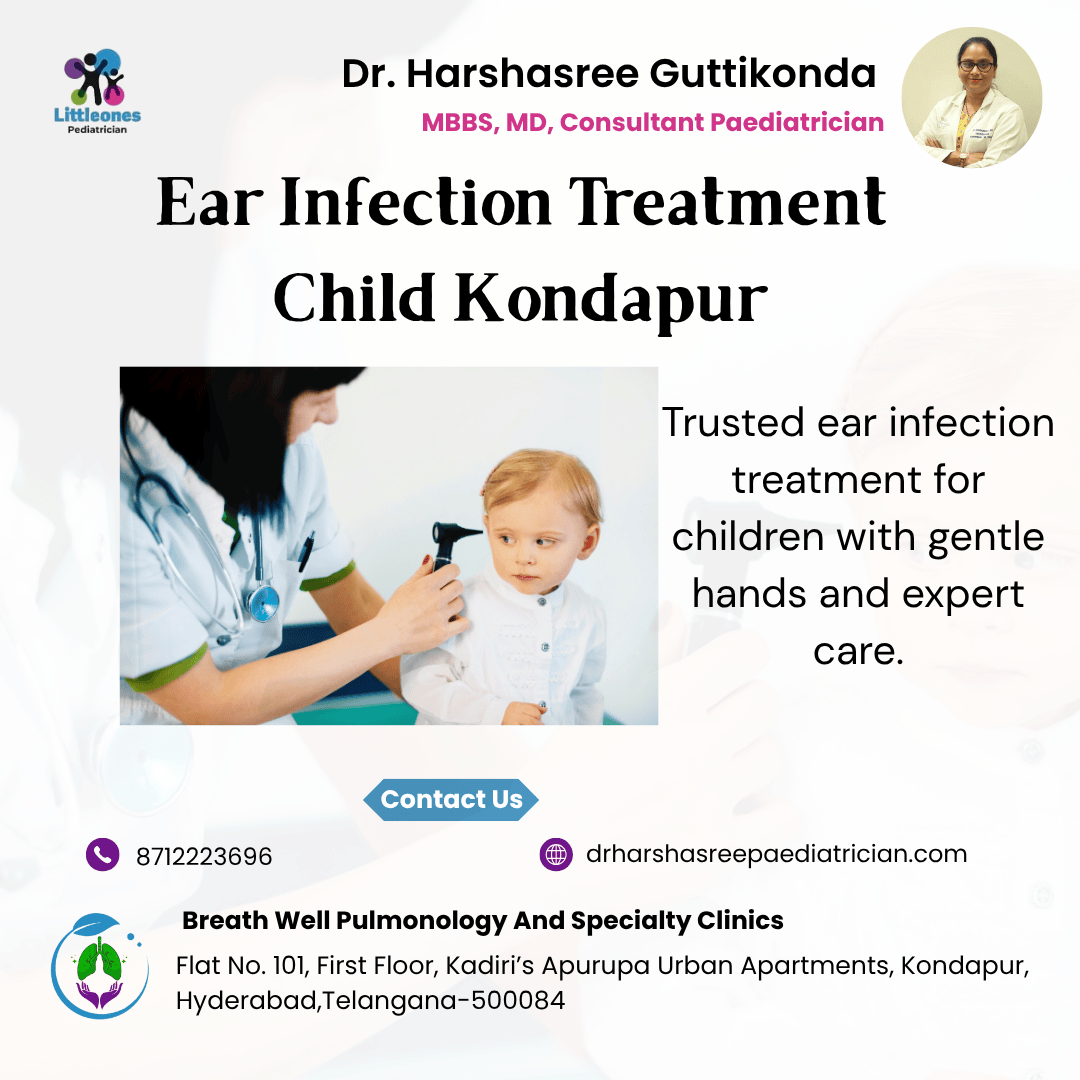
At Dr. Harshasree Paediatrician, ear infection treatment in Kondapur is designed to provide fast relief and long-term protection. Expert care helps manage symptoms like pain, fever, and irritation while supporting your child’s overall ear health.
Experienced pediatricians not only treat the infection but also guide parents on preventive measures and aftercare.
Treatment Options
Treatment for ear infections depends on the severity and cause. Common approaches include:
Pain relief medications
Antibiotics (if bacterial infection is confirmed)
Warm compress for comfort
Monitoring mild infections without immediate medication
Doctors may also recommend follow-up visits to ensure the infection has completely cleared.
Home Care Tips
While medical treatment is important, parents can support recovery at home by:
Keeping the child hydrated
Ensuring proper rest
Avoiding exposure to smoke or allergens
Following the doctor’s instructions carefully
However, home remedies should not replace professional medical advice in moderate to severe cases.
 Conclusion
Ear infections in children are common but should never be taken lightly. Knowing when to see a doctor can make a significant difference in your child’s recovery and long-term health. Symptoms such as persistent pain, high fever, fluid discharge, and hearing issues require immediate medical attention.
If you are looking for expert care and reliable treatment for your child’s ear infection, you can visit:
https://drharshasreepaediatrician.com/services/ear-infections/
They provide specialized pediatric care focused on safe, effective, and compassionate treatment. With the right medical support, your child can recover quickly and maintain healthy ear function for the future.





Add Comment