











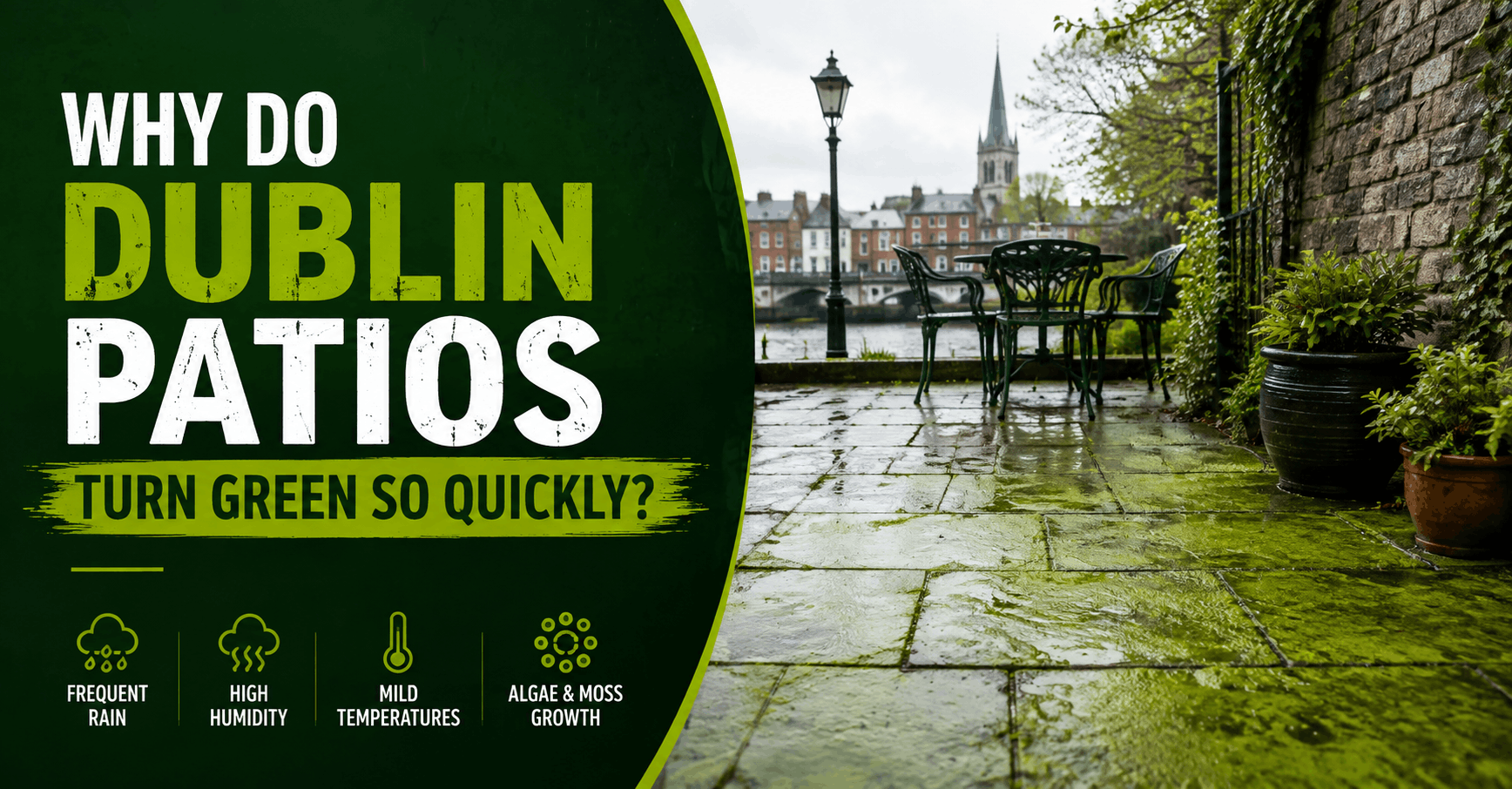


You clear away the garden furniture, make a cup of tea and look forward to the first proper sit-down outdoors. Then you notice it: the patio has turned green.
Not a soft, cheerful garden green, either. This is the slippery film creeping across the paving, gathering around the edges and hiding between the joints. It seems to have appeared overnight, although the patio looked perfectly respectable a few weeks ago.
So, what is going on? Why do Dublin patios attract algae, moss and lichen so quickly? The short answer is moisture. The fuller answer involves shade, leaves, drainage and a climate that rarely lets surfaces stay dry.
What you’ll discover in this guide
You’ll learn why Dublin’s weather encourages green growth, how shade and drainage make it worse, why paving materials need different care, and how to slow regrowth.
Dublin’s weather gives algae a head start
Dublin’s weather can be wonderfully unpredictable: sunshine in the morning, a shower at lunchtime and a cool, damp evening by teatime. For paving, that constant change creates an ideal environment for organic growth.
Algae needs only a thin layer of moisture to get started. Moss prefers a surface that stays damp, while lichen settles into tiny imperfections in stone and paving. A shaded patio corner after several wet days may be more than enough.
That is why a seasonal patio cleaning Dublin routine often makes more sense than a one-off job. The rain is not doing anything wrong; it is simply giving organic growth time to settle and spread.
It’s not just the rain
Rain gets most of the blame, but it is only one part of the story. Think of green growth as a guest that needs three things: moisture, somewhere to settle and enough time undisturbed.
A patio shaded by a wall, fence or overhanging tree may dry much more slowly than an open, sunny surface. Fallen leaves add another layer to the problem. They trap moisture against the paving, release organic material as they break down and prevent air from moving freely across the surface.
Garden furniture and plant pots create their own little microclimates. Move a pot that has sat in the same place for months and you may find a damp, green ring underneath. The paving has simply had no chance to breathe.
Drainage matters too. If water collects in a low spot or struggles through blocked channels, the surface stays wet longer. If you’re researching patio cleaning South Dublin, the timing may differ from properties in more exposed areas because every garden has its own shade, shelter and airflow.
Why does green growth look worse on some patios?
The paving itself can make a big difference. Textured concrete gives algae plenty of tiny dips in which to settle. Natural stone can be porous, allowing moisture and fine soil particles to work their way into the surface. Older slabs may also have weathered joints, small cracks or uneven areas that collect debris.
Sandstone needs a gentler approach
Sandstone is especially attractive, but it needs thoughtful care. Its colour variation and soft texture are part of its character, yet aggressive cleaning can leave it patchy, disturb the joints or damage the finish.
When planning sandstone patio cleaning Dublin, the first question should be simple: what can this stone safely tolerate? The strongest method is not always the best one. The same care applies to limestone, reclaimed slabs and other specialist surfaces.
Before reaching for the most powerful setting, consider the age, condition and porosity of the paving. A good clean should refresh the surface without making it look like a different material altogether.
What are those stubborn black spots?
Green algae tends to spread like a film, but black spots are a different-looking nuisance. They often appear as tiny dark dots scattered across pale slabs, particularly sandstone. They may be mistaken for dirt, paint splashes or even bits of chewing gum that have somehow multiplied.
These marks are often linked to lichen or stubborn organic staining. They can attach firmly, so a quick rinse may brighten the patio without removing the spots. Scrubbing harder can damage delicate paving while leaving the problem underneath.
The key to black spot removal Dublin homeowners often need is patience as much as pressure. A suitable treatment, enough time to work and a careful clean are often more useful than brute force. Test a small area first, especially on natural stone.
Is patio pressure washing a permanent fix?
There’s a reason patio pressure washing Dublin remains popular: it can lift grime, loose moss and much of the algae that makes paving look tired. But it cannot change the conditions around the patio.
If the area stays shaded, leafy and slow to drain, green growth may return. That does not mean the clean failed; the environment still suits algae and moss. Pressure washing is a useful tool, not a magic wand.
Technique matters as well. A narrow jet held too close to the paving can mark certain surfaces, disturb jointing material or push water into vulnerable cracks. A wider spray pattern, a steady distance and controlled overlapping passes are generally kinder to the surface. Nearby plants should be protected from overspray, and any cleaning product should be used according to its instructions.
Five simple ways to slow down the green comeback
You do not need to patrol the patio with a toothbrush. A few habits can help.
- Sweep regularly. Remove leaves, soil and other debris before they settle into the joints.
- Keep water moving. Clear drains, channels and run-off routes so rainwater can leave the area.
- Move pots and furniture. Give shaded patches an occasional chance to dry and breathe.
- Trim overgrown vegetation. More sunlight and airflow can make the surface less welcoming to moss and algae.
- Check the patio after winter. A small patch is easier to manage than a thick carpet spreading across every joint.
Sealing may reduce staining on some paving, but it is not suitable for every surface. The patio must be clean and dry, and the product must suit the stone. The wrong sealer can alter the colour or trap moisture, so it should be a considered decision rather than an automatic final step.
Green does not always mean neglected
A little moss in a quiet corner can look perfectly at home in a leafy Dublin garden. The problem starts when organic growth spreads over walking areas, makes the paving slippery or hides damaged joints and drainage issues.
So, why do Dublin patios turn green so quickly? Because Atlantic weather supplies the moisture, while shade, debris, porous surfaces and limited airflow give that moisture time to stay. Once you understand the pattern, the green film becomes less of a mystery and more of a maintenance clue.
A sensible patio cleaning Dublin routine is not about constant scrubbing. It is about noticing where water collects, removing organic debris early and choosing a cleaning approach that suits the paving. Do that, and the patio has a much better chance of staying clean, safe and ready for the next sunny break.





Add Comment