













Introduction
Power electronics projects are an essential part of modern electrical and electronics engineering, offering students a strong foundation in understanding how electrical power is converted, controlled, and efficiently utilized. These projects are widely chosen for academic submissions and article publications because they combine theoretical concepts with real time applications. With the growing demand for renewable energy systems and smart electrical solutions, power electronics has become a core area for students aiming to build a successful technical career.
Understanding Power Electronics Projects
Power electronics projects mainly focus on the design, analysis, and implementation of circuits that control the flow of electrical energy. These projects involve the use of semiconductor devices such as diodes, MOSFETs, and IGBTs to perform operations like AC to DC conversion, DC to AC inversion, and voltage regulation. Students gain practical exposure by working on systems like converters, inverters, and controlled rectifiers, which are widely used in industries and advanced technologies.
Applications and Real Time Usage
The importance of power electronics projects can be clearly seen in their wide range of applications across different sectors. These projects help students understand how electrical systems operate efficiently in real-world conditions.
- Renewable energy systems such as solar photovoltaic (PV) integration
- Electric vehicles and battery charging systems
- Industrial automation and motor control
- Power supply units for electronic and communication devices
Latest Trends in Power Electronics Projects
In recent years, power electronics has evolved rapidly with the integration of advanced technologies. Students can focus on trending topics to improve their knowledge and career opportunities. Projects related to solar inverters, bidirectional converters, and high step-up DC-DC converters are gaining more importance. Additionally, smart grid systems and energy-efficient designs are becoming key areas in modern project development.
Tools and Technologies Used
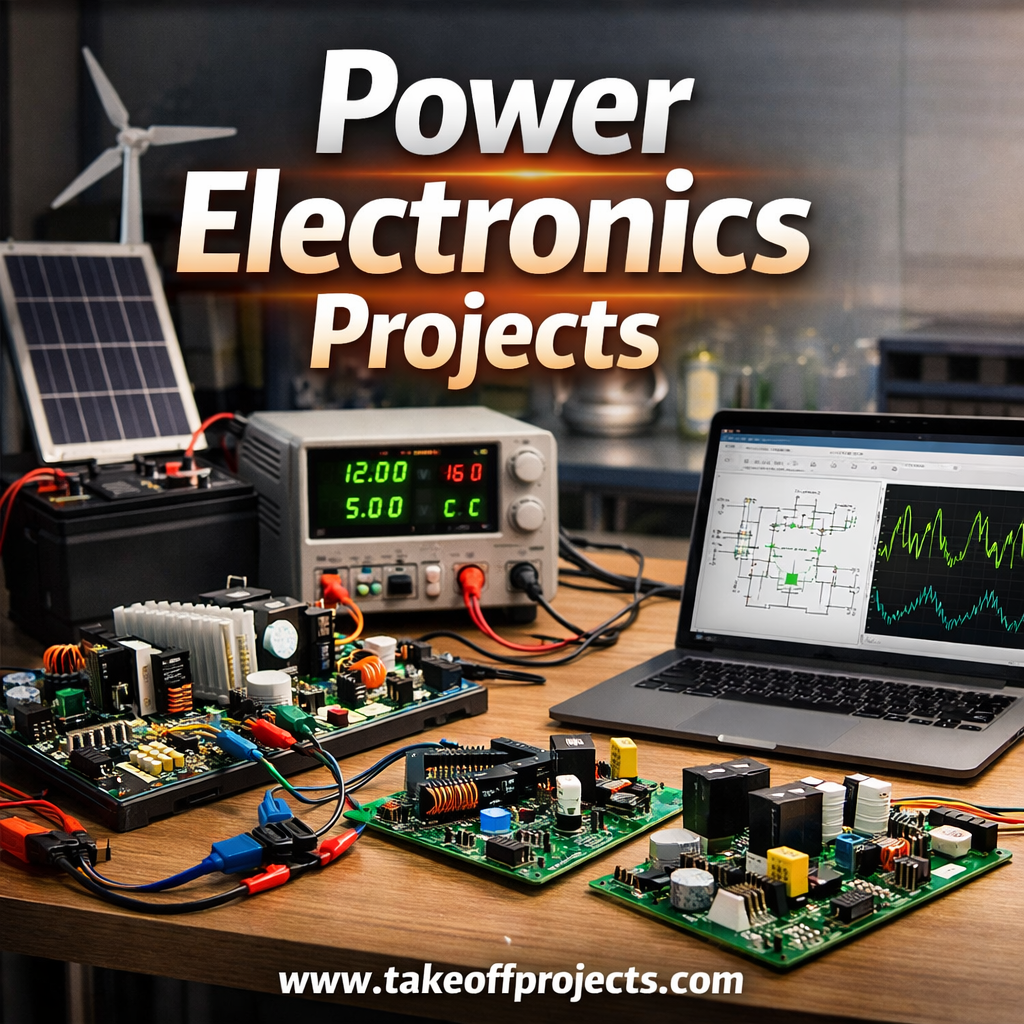
To successfully complete power electronics projects, students work with both software and hardware tools. These tools help in designing, simulating, and implementing the project effectively.
- Simulation tools such as MATLAB/Simulink
- Circuit design software like Proteus
- Hardware components including MOSFETs, drivers, and controllers
- Understanding these tools helps students improve their practical skills and technical confidence.
Project Services and Student Support
For students working on academic or final-year submissions, power electronics project providers offer comprehensive services that ensure both learning and successful project completion. These services are structured to guide students from the initial stage to final implementation.
- Well-defined project modules with clear objectives
- Detailed documentation suitable for academic submissions
- Simulation support and circuit explanation
- Hardware implementation guidance
- Assistance for project presentation and viva
Key Project Domains and Concepts
Power electronics projects cover a variety of important concepts that are highly relevant in both academics and industry. Students working on these topics gain in-depth knowledge of power conversion techniques.
- DC-DC converters for voltage step-up and step-down applications
- DC-AC inverters used in renewable energy systems
- Bidirectional converters for energy storage systems
- High step-up converters for efficient power transfer
- Grid-connected systems for solar energy integration
Benefits for Students
Working on power electronics projects offers multiple advantages for students, especially those aiming to build careers in core engineering fields. These projects enhance both technical and practical skills while improving overall understanding.
Students develop strong analytical and problem-solving abilities by working on real-time systems. They also gain hands-on experience with circuit design, simulation tools, and hardware components. Moreover, exposure to industry relevant technologies such as renewable energy systems and smart grids increases their career opportunities in the competitive job market.
Conclusion
Power electronics projects provide an excellent platform for students to bridge the gap between theory and practical implementation. They are highly suitable for academic submissions, article postings, and knowledge enhancement due to their relevance and application-oriented nature. By choosing the right project and understanding its real-world significance, students can build a strong technical foundation and prepare themselves for future advancements in the field of electrical and electronics engineering.








Add Comment