











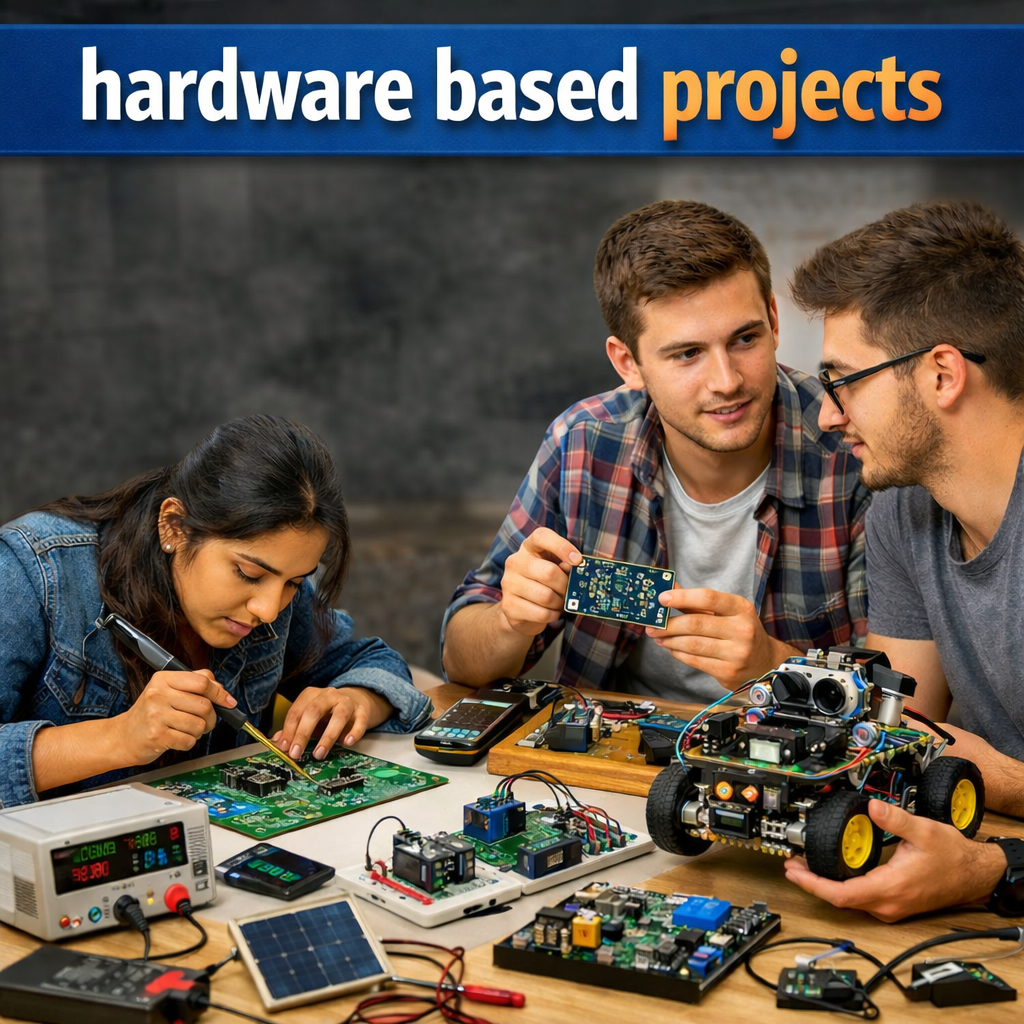


Introduction to Hardware Based Projects
Hardware based projects play a crucial role in engineering education, especially for students from ECE, EEE, and Embedded Systems backgrounds. These projects focus on designing, developing, and implementing real time systems using physical components such as microcontrollers, sensors, circuits, and communication modules. Unlike purely software projects, hardware projects provide hands on experience, helping students understand how theoretical concepts work in real world applications.
For students aiming to build strong technical skills and improve job readiness, working on hardware based projects is highly beneficial. These projects not only enhance practical knowledge but also improve problem-solving and analytical abilities.
Types of Hardware Based Projects
Students can explore different domains based on their interests:
- Embedded Systems Projects: Work with microcontrollers like Arduino, PIC, and Raspberry Pi to build real time systems and control devices.
- IoT Based Projects: Develop smart applications like home automation and smart agriculture using internet connectivity and sensors.
- Robotics Projects: Design robots such as line followers and obstacle avoidance systems using sensors and controllers.
- Power Electronics Projects: Focus on energy systems like inverters and motor controllers to understand power conversion and control.
- Automation Projects: Build systems for industrial and home automation to control processes with minimal human effort.
Key Features of Quality Hardware Based Projects
When choosing a hardware project, students should focus on important features to ensure better learning and successful implementation:
- Real-time Application – Projects should solve practical, real world problems.
- Latest Technology Usage – Integration of modern technologies like IoT, AI, and automation concepts.
- Clear Documentation – Includes circuit diagrams, source code, and proper explanations for easy understanding.
- Hands-on Implementation – Projects should be fully working models, not just simulations.
- Scalability – Ability to upgrade, modify, or extend the project in the future.
These features ensure that the project is not only academic but also industry-relevant and useful for career growth.
Hardware Projects Provided for Students
Professional project providers offer a wide range of hardware based projects designed specifically for students. These services typically include:
- Final Year Projects – Designed for ECE, EEE, and Diploma students with complete implementation.
- Mini Projects – Ideal for practice, learning, and improving technical skills.
- IEEE Based Projects – Developed using latest research concepts and technologies.
- Customized Projects – Tailored according to student requirements and academic needs.
- Complete Project Kits – Includes hardware components, circuit setup, and source code.
- Technical Support & Documentation – Step by step guidance with clear explanations.
These services help students complete their academic projects successfully while also gaining practical implementation knowledge.
Benefits of Working on Hardware Based Projects
Hardware projects provide multiple advantages for students, both academically and professionally:
- Improve Practical and Technical Skills – Gain hands on experience with real components and systems.
- Enhance Core Concept Understanding – Better clarity of engineering fundamentals through implementation.
- Increase Placement Opportunities – Higher chances of getting jobs in core engineering companies.
- Build Strong Project Portfolio – Helps in creating an impressive resume with real-time projects.
- Boost Confidence – Improves ability to handle real-world systems and technical challenges.
Students who work on real-time hardware projects often stand out during interviews and technical discussions.
Conclusion
Hardware based projects are an essential part of engineering learning, offering practical exposure and industry relevant skills. By working on real time applications and using modern technologies, students can significantly enhance their knowledge and career opportunities. Choosing the right project with proper guidance and support can make a huge difference in both academic success and future growth.








Add Comment