












Introduction
IEEE Projects for EEE (Electrical and Electronics Engineering) are an essential part of every engineering student’s academic journey. Especially in the final year, choosing the right IEEE project becomes a crucial decision. These projects are research based on focus on real time applications, making them more valuable than regular academic projects.
IEEE Projects for EEE help students understand industry level concepts and improve practical knowledge. By working on these projects, students can gain hands on experience, boost confidence, and prepare for future job opportunities.
What are IEEE Projects for EEE?
IEEE Projects for EEE is developed based on research papers and are designed to solve real world engineering problems. These projects use modern technologies and innovative approaches to provide effective solutions.
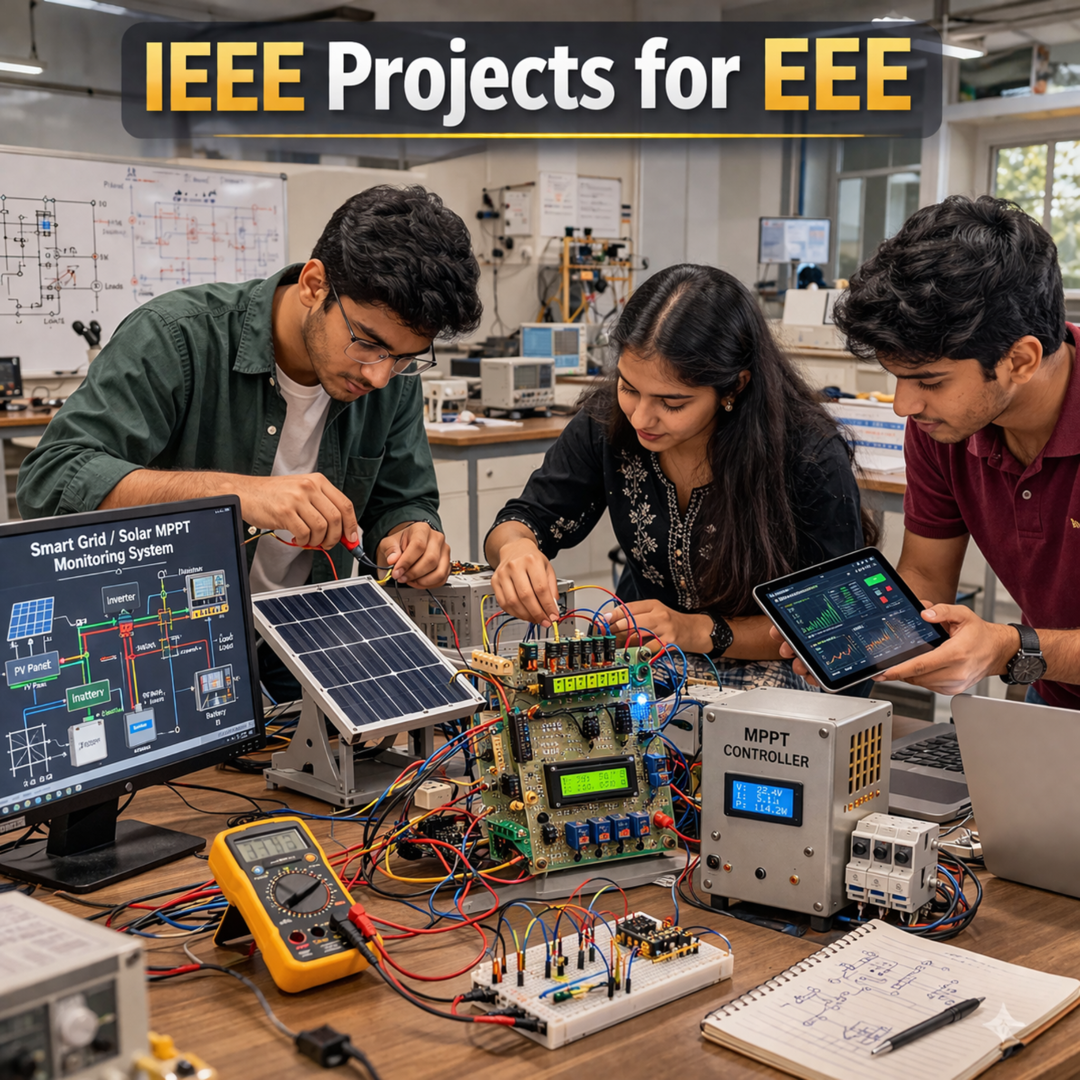
Students can choose IEEE Projects for EEE in domains such as power systems, renewable energy, automation, and electric vehicles. These projects help in applying theoretical knowledge to practical implementation, which is very important for engineering students.
Compared to regular projects, IEEE based projects are more advanced and provide better learning opportunities.
Importance of IEEE Projects for Students
IEEE Projects for EEE is not only important for academic marks but also for career development. These projects help students gain real time experience and improve their understanding of core concepts.
Students who work on IEEE projects develop strong problem-solving skills and become more confident in handling technical challenges. These projects also create a positive impression during campus placements and job interviews.
How IEEE Projects Help EEE Students
IEEE Projects for EEE help students connect theoretical knowledge with real time applications. For example, in renewable energy projects, students learn about energy generation, system design, and efficiency improvement.
This kind of practical exposure helps students gain in depth knowledge and prepares them for industry level work. It also improves analytical thinking and technical skills.
Student Uses of IEEE Projects
- IEEE Projects for EEE is mainly used for final year academic submission, helping students achieve better academic performance.
- Students use these projects for seminars and presentations, improving their communication and explanation skills.
- These projects can be added to resumes, helping students showcase their practical knowledge during interviews and placements.
- IEEE projects are also useful for mini projects and internal assessments, allowing students to reuse and expand their work.
- Students interested in research and higher studies use IEEE Projects for EEE as a base for innovation and future developments.
Student Services for IEEE Projects
Many students need support while working on IEEE Projects for EEE, especially during implementation. Project services help students complete their work easily and effectively.
- Complete guidance is provided from project selection to final submission.
- Documentation such as reports and abstracts is given for academic use.
- PPT support helps students during seminars and viva.
- Technical assistance is available for coding, circuit design, and troubleshooting.
- Training sessions and support improve understanding and project performance.
These services make it easier for students to understand and complete their IEEE projects with confidence.
How to Use IEEE Projects Effectively
To get maximum benefit from IEEE Projects for EEE, students should focus on understanding the project rather than just submitting it. Learning the concept, implementation process, and real-time applications is very important.
Students need to prepare adequately for their upcoming viva examination and presentation duties. The projects function as an effective educational instrument which helps individuals create their professional development.
Conclusion
IEEE Projects for EEE is highly beneficial for both academic success and career development. They provide practical knowledge, improve technical skills, and prepare students for real world challenges.
By selecting the right IEEE project and understanding it clearly, students can build a strong foundation for their future.








Add Comment