











Introduction
In today’s world, power electronics plays a crucial role in converting and managing electrical energy efficiently. One of the most important devices in this field is the inverter, which converts DC (Direct Current) into AC (Alternating Current). Because of its wide applications in solar systems, UPS, electric vehicles, and industrial automation, projects on inverters are highly valuable for engineering students.
What are Inverter Projects?
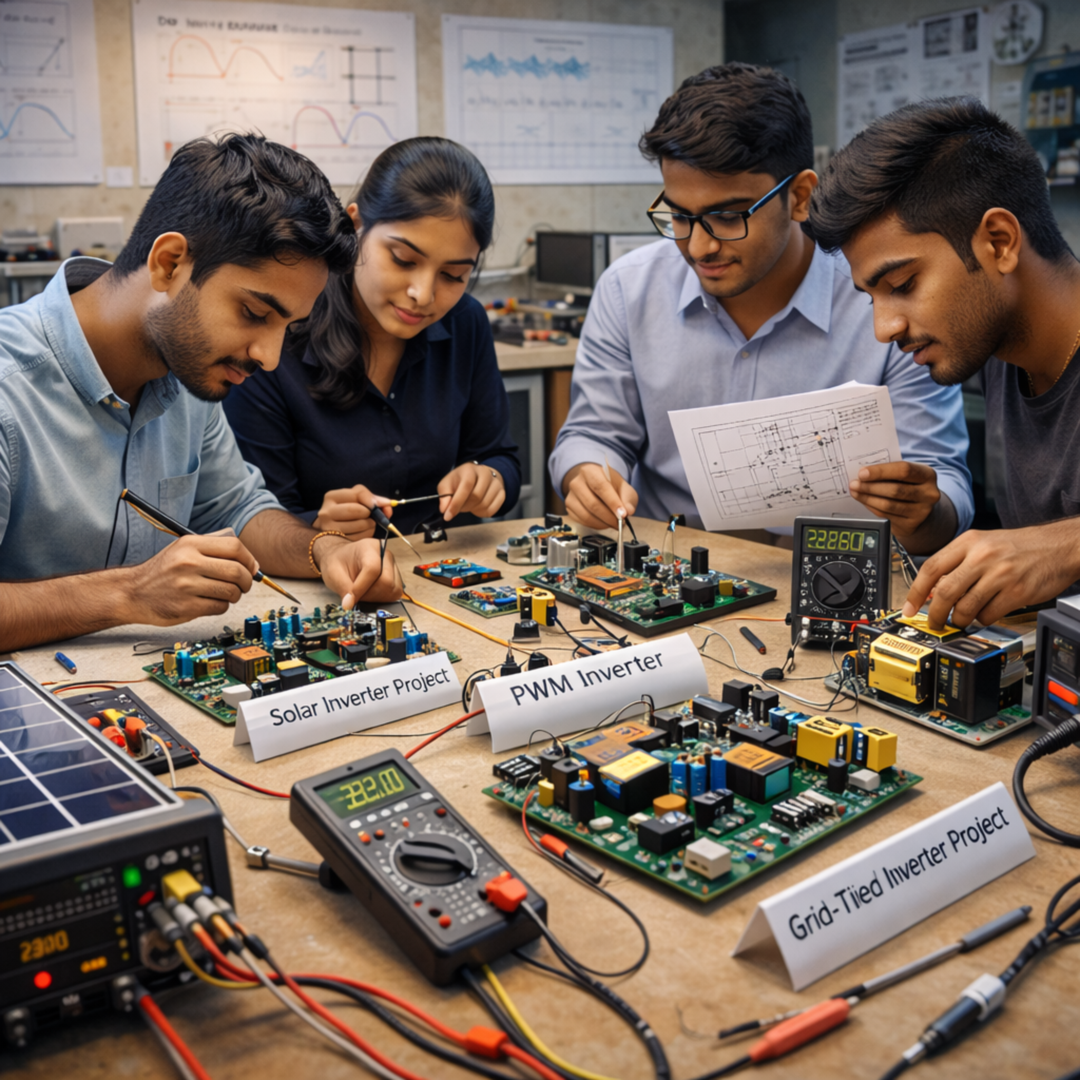
Inverter projects focus on designing, developing, and analyzing circuits that convert DC power into AC power. These projects help students understand core concepts like switching techniques, PWM (Pulse Width Modulation), voltage control, and efficiency optimization. Students working on inverter based projects gain both theoretical knowledge and practical skills.
Types of Inverter Projects for Students
There are several types of inverter projects that students can work on:
- Solar Power Inverter Projects
- These projects involve converting solar energy into usable AC power. It is one of the most popular and eco-friendly project ideas.
- PWM-Based Inverter Projects
- These projects use Pulse Width Modulation to generate a stable AC output, improving efficiency and reducing harmonics.
- Pure Sine Wave Inverter
- This type of project produces a clean and smooth AC waveform, suitable for sensitive electronic devices.
- Multilevel Inverter Projects
- Advanced projects that improve output quality and are used in industrial applications.
- Grid-Tied Inverter Projects
- These systems connect with the main power grid and are commonly used in renewable energy systems.
Services and Support for Inverter Projects
Many project providers offer complete support for students, including:
- Ready-made project kits
- Circuit diagrams and code explanation
- Simulation using tools like MATLAB or Proteus
- Documentation and project reports
- Guidance for viva and presentation
These services help students complete their academic projects efficiently and with better understanding.
Benefits of Inverter Projects for Students
Working on inverter projects offers multiple advantages:
- Practical Knowledge: Students learn real-time applications of power electronics.
- Skill Development: Improves circuit designing, coding, and problem-solving skills.
- Career Opportunities: Useful for jobs in renewable energy, electrical industries, and automation sectors.
- Innovation Scope: Students can develop smart and efficient inverter systems.
Applications of Inverter Systems
Inverters are widely used in many real-world applications where DC power needs to be converted into AC power for practical use:
Solar Energy Systems
In solar power setups, inverters play a key role by converting the DC electricity generated from solar panels into AC power that can be used in homes, industries, and commercial buildings.
Uninterruptible Power Supply (UPS)
Inverters are an essential part of UPS systems, providing backup power during electricity failures. They ensure continuous operation of important devices like computers, hospitals equipment, and communication systems.
Electric Vehicles (EVs)
In electric vehicles, inverters convert the battery’s DC power into AC power to drive the motor. This helps in efficient speed control and better performance of the vehicle.
Industrial Motor Drives
In industries, inverters are used to control the speed and operation of motors in machines. This improves energy efficiency and reduces power consumption in manufacturing processes.
Home Appliances and Backup Systems
Inverters are commonly used in homes for power backup solutions. They help run essential appliances like fans, lights, and televisions during power cuts.
Renewable Energy Integration
Inverters are used to integrate renewable energy sources like wind and solar with the electrical grid, ensuring stable and reliable power supply.
Conclusion
Projects on inverters are an excellent choice for students who want to build strong knowledge in power electronics and renewable energy systems. These projects not only enhance technical skills but also provide practical exposure to real-world applications. By working on inverter based projects, students can improve their understanding and prepare themselves for future career opportunities in the electrical and electronics field.








Add Comment