













Introduction
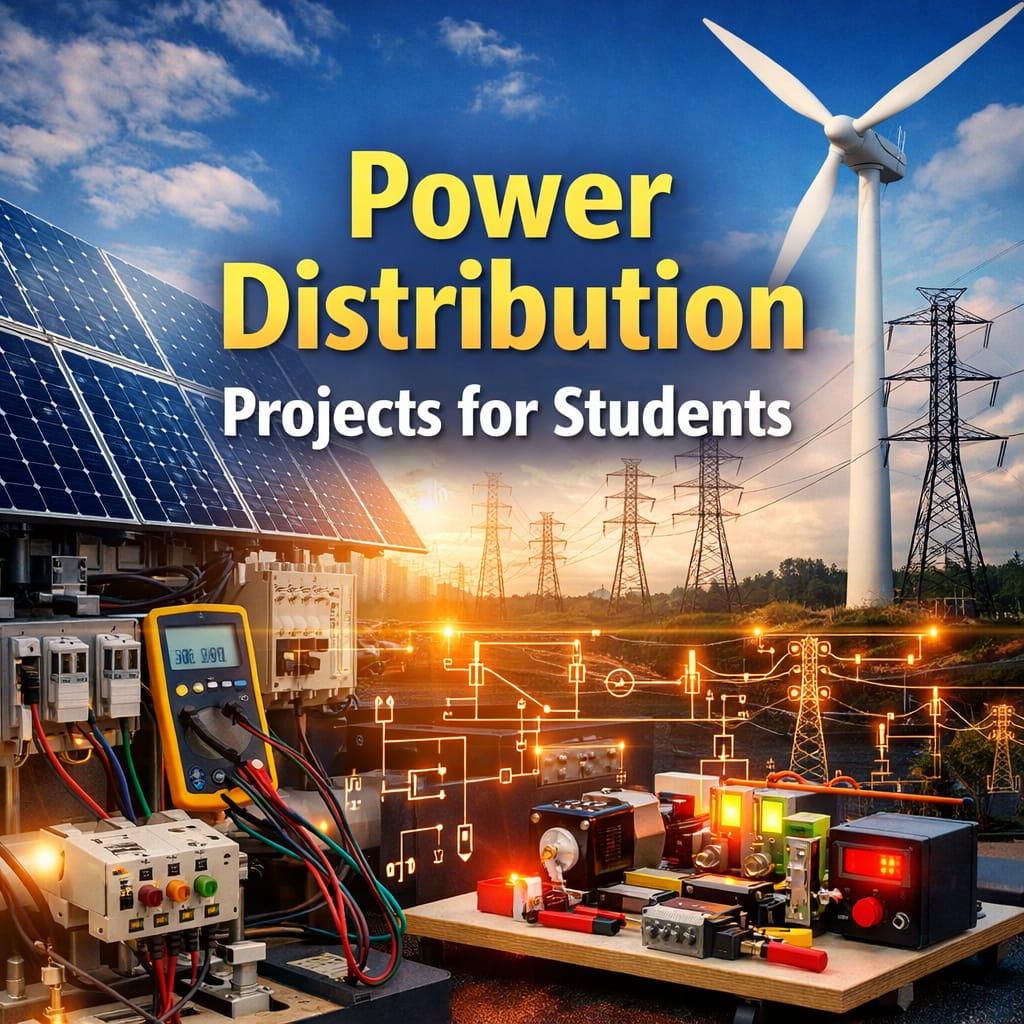
Power distribution projects are very important for students who want to understand how electricity is delivered from power stations to homes, industries, and commercial areas. Electrical and electronics engineering students especially need practical exposure along with theory, and these projects help in building that real time understanding. By working on power distribution projects, students can improve their technical skills and gain clarity on how modern electrical systems operate.
With the increasing use of renewable energy sources like solar and wind, power distribution systems are becoming more advanced. Learning through projects helps students stay updated with these changes and prepares them for real world applications.
Overview of Power Distribution Projects in Electrical Engineering
Power distribution projects focus on how electricity is delivered from substations to end users efficiently. They help students understand key components like transformers, feeders, and distribution lines.
These projects mainly deal with voltage control, power loss reduction, and system stability. They also introduce modern concepts such as renewable energy integration and smart grid technologies, giving students practical knowledge of real time electrical systems.
Who Can Benefit from Power Distribution Projects?
Power distribution projects are useful for engineering students, diploma students, and beginners interested in electrical systems. Final year students can use these projects for academic submissions, while others can improve their practical and technical skills.
These projects are especially helpful for students who want to build a strong foundation in power systems and prepare for careers in electrical and energy sectors.
Importance of Power Distribution Projects
Working on power distribution projects helps students understand how electrical systems function in real time instead of just learning theory.
- Students can analyze real world problems like voltage drops, load variations, and system faults in a practical way.
- These projects improve problem solving skills and help in understanding system design and performance.
- They introduce modern concepts such as renewable energy integration and smart grid technologies.
- Overall, these projects play a key role in building both technical knowledge and confidence.
Types of Power Distribution Projects
- There are different types of power distribution projects based on technologies and applications.
- Some projects focus on DC and AC distribution systems, while others deal with renewable energy integration like solar and wind systems.
- Advanced level projects include smart grids, electric vehicle related systems, and fault detection mechanisms in distribution networks.
- Choosing the right type depends on the student’s interest and academic level.
Advantages of Power Distribution Projects
- Power distribution projects offer several benefits that help students grow academically and professionally.
- These projects provide practical exposure along with theoretical understanding, making learning more effective.
- Students develop technical and analytical skills that are important in electrical engineering.
- They help in understanding real time system behaviour and challenges in power distribution.
- These projects are useful for final year submissions and building a strong project portfolio.
How to Choose the Right Power Distribution Project
Choosing the right power distribution project is important for effective learning. Students should select projects based on their knowledge, tools, and area of interest.
Beginners can start with simple simulation based projects to understand basic concepts. Intermediate learners can focus on power quality and distribution analysis. Advanced students can choose projects related to smart grids or renewable energy systems.
Selecting the right project helps in better understanding and successful completion.
Tools and Technologies Used
Most power distribution projects use simulation tools like MATLAB/Simulink for designing and analyzing systems. Hardware based projects may include components such as converters, transformers, and controllers.
Understanding these tools helps students gain practical experience and makes it easier to work on real-time applications in the future.
Applications of Power Distribution Projects
The concepts learned from power distribution projects are widely used in real life applications such as residential and industrial power supply, renewable energy systems, and smart grid development.
- These projects are useful in designing efficient electrical distribution networks.
- They help in improving power quality and system reliability.
- They are applied in modern technologies like electric vehicle charging and automated power systems.
- This shows their strong relevance in today’s electrical and energy sector.
Conclusion
Power distribution projects are an essential part of learning for students in the electrical field. They provide both theoretical knowledge and practical experience, helping students understand how electricity is distributed efficiently.
By working on these projects, students can build strong technical skills, stay updated with modern technologies, and prepare for real world challenges. Overall, power distribution projects are a valuable step towards building a successful career in electrical engineering.








Add Comment